Why AdSense Requires a Consent Message in the EEA and UK
If your site serves visitors in the European Economic Area or the United Kingdom, AdSense requires a consent management platform before any personalized ad can load for those users. This rule sits on top of Google's own EU user consent policy, which asks publishers to collect legal basis for data processing through a recognized consent flow. The two ways to satisfy this are picking a google certified cmp from Google's approved list, or building an adsense consent message yourself using the IAB Transparency and Consent Framework specification. Both routes are allowed, but they are not equally practical for most publishers.
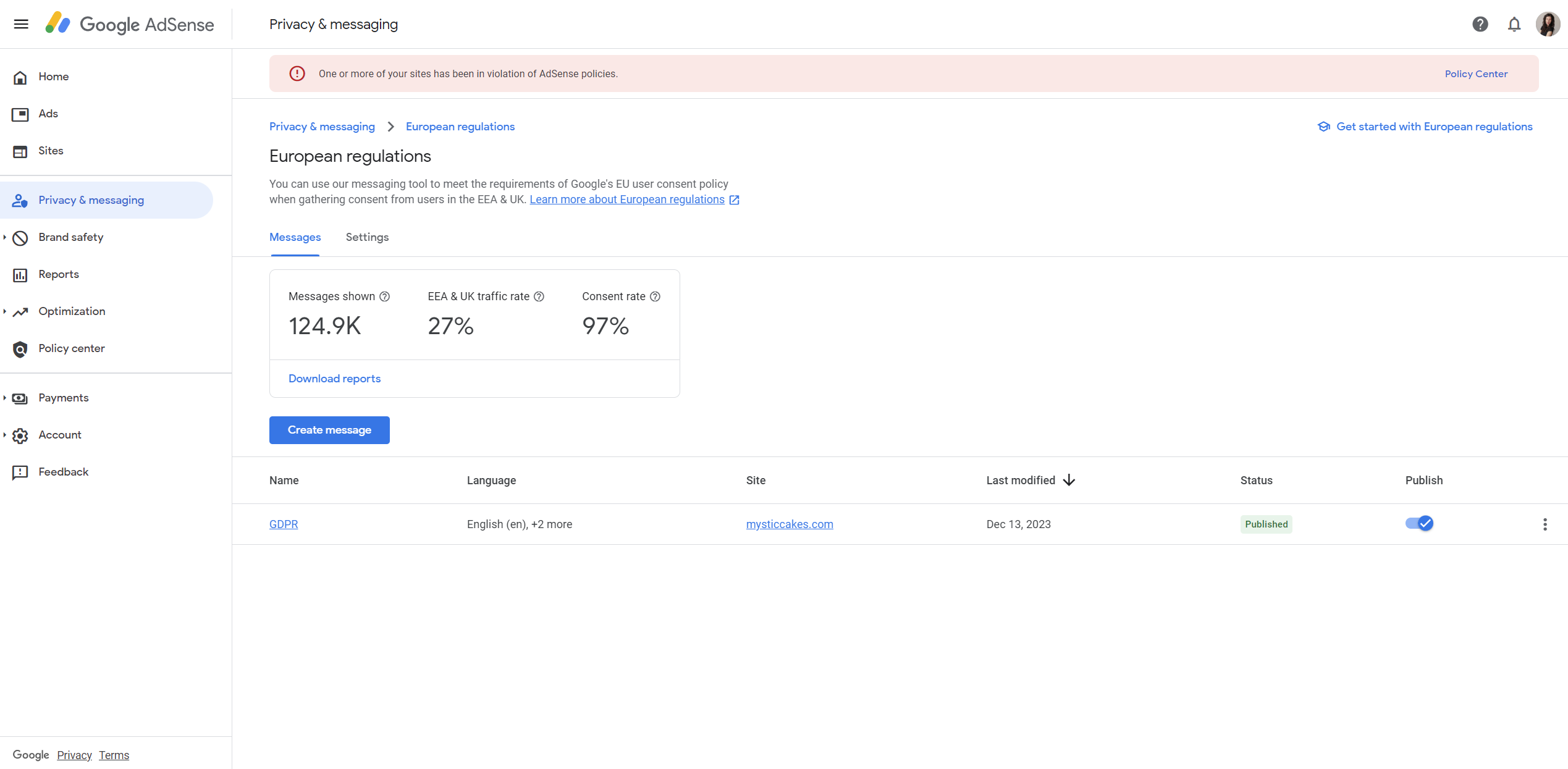
What a Google Certified CMP Actually Provides
A Google Certified CMP is a third party consent tool that Google has tested against its own integration requirements and formally approved. These providers plug into Google Ad Manager and AdSense directly, pass a valid TC string on every page load, and get automatic updates whenever Google or the IAB changes framework rules. Setup usually means adding one script tag and configuring categories through a dashboard, with no need to track the underlying legal changes yourself. This is the fastest path to adsense gdpr consent compliance for a site that does not have an in house legal or engineering team dedicated to privacy tooling.
.png)
What a Custom Built Consent Message Involves
Building your own google privacy messaging banner means writing code that generates a valid TCF consent string, stores user choices correctly, and blocks ad requests until consent is captured. This gives full design control and no per pageview vendor fee, but it also means your team owns every future compliance update. When the IAB releases a new framework version, or Google changes what counts as a valid consent signal, a custom banner has to be patched manually and re-tested against Google's requirements before ads resume normally.
Difference 1: Compliance Guarantee
A google certified cmp comes with Google's own validation that the tool sends a properly formed signal recognized across the ad ecosystem, not just by AdSense. A custom message can technically work, but any small formatting error in the consent string can cause ad requests to fail silently or worse, cause AdSense to treat the traffic as non compliant. Certification removes that guesswork entirely.
Difference 2: Setup Time and Ongoing Maintenance
Certified providers typically take under an hour to configure and require almost no ongoing developer time. A custom adsense consent management platform build can take days of development plus recurring maintenance every time framework specifications shift, which happens more than once a year in most jurisdictions currently expanding privacy law.
Difference 3: Cost Over Time
Most certified CMPs charge based on monthly pageviews, which can add real cost at scale, though many offer free tiers for smaller sites. A custom build avoids that recurring fee but shifts the cost into developer hours, which for a solo publisher or small team often ends up more expensive once you count testing and future fixes.
Difference 4: Speed of Adapting to New Rules
When Google updates its consent requirements, certified partners typically push the fix on their end within days, and sites using them inherit the update automatically. A custom message depends entirely on someone noticing the change, reading the new specification, and shipping a fix before ads get restricted in affected regions.
Difference 5: Consent String Accuracy and Reporting
Certified tools generate audit trails and reporting dashboards showing consent rates by region, which is useful both for compliance records and for understanding how privacy prompts affect ad revenue. Custom builds can replicate this, but it requires additional development that most teams skip, leaving publishers with no visibility into how consent choices are trending over time.
Difference 6: Risk of Ad Serving Restrictions
The biggest practical risk with a homemade banner is a subtle bug that goes unnoticed for weeks, during which Google may restrict personalized ads or flag the account for review. A google cmp adsense integration that carries certification is far less likely to produce this kind of silent failure since the underlying code has already been vetted against Google's technical checks.
Which Option Fits Different Publisher Sizes
Smaller and mid sized sites almost always come out ahead using a certified provider, since the time saved outweighs the licensing cost, especially once you account for the risk of losing ad revenue during an undetected compliance gap. Larger publishers with dedicated engineering resources sometimes build custom tooling to gain design flexibility or to integrate consent data directly into their own analytics stack, but even then many still choose a certified base and customize the interface layer on top rather than building the consent logic from zero.
Final Verdict
For nearly every AdSense publisher outside of large media companies with dedicated privacy engineering teams, a Google Certified CMP is the more reliable choice. It removes the burden of tracking framework changes, reduces the risk of silent ad serving restrictions, and gets a compliant adsense consent message live in under an hour. A custom build only makes sense when design control or data ownership matters more than the time and risk saved by using an already certified solution.


