
An AdSense earnings drop without an obvious explanation is one of the most disorienting experiences in publishing. The dashboard shows a number that is wrong in ways you cannot account for, and the instinct is to start changing things: toggling Auto Ads on and off, moving ad units, switching layouts, contacting support. Most of those responses make the situation worse or do nothing because they address symptoms rather than the actual cause.
The correct first step is not action. It is diagnosis. AdSense earnings drop for fundamentally different reasons that require fundamentally different responses. A publisher who applies a traffic-side fix to a demand-side problem, or who makes site changes in response to a platform-level event, wastes time and potentially destabilizes an account that would have recovered on its own.
This guide provides the diagnostic framework that identifies which type of earnings drop you are experiencing, explains the causes confirmed for 2026 specifically, and maps each cause to the correct response.
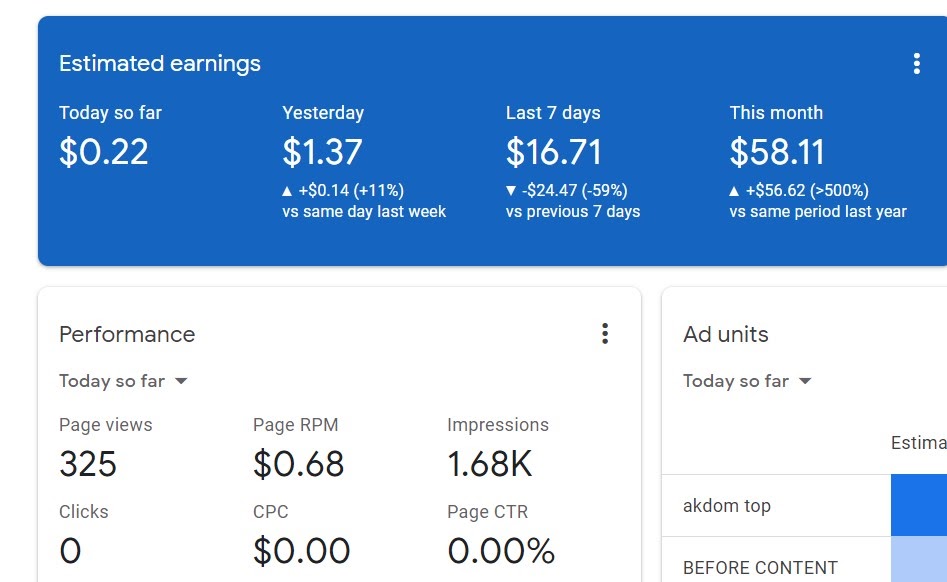
Step 1: Run the 60-Second Diagnostic Before Doing Anything Else
Open your AdSense reports and compare two metrics for the period before and after your earnings dropped: impressions and RPM. The relationship between these two numbers identifies your drop category with a high degree of accuracy.
Open AdSense, go to Reports, and compare your RPM trend to your impressions trend for the last 90 days. If impressions held steady but RPM dropped, your problem is demand-side. If impressions also dropped, your problem is traffic-side.
Pattern A: Impressions stable, RPM dropped
Your traffic is arriving and ads are loading, but each thousand impressions is generating less revenue. The problem is not your audience. It is what advertisers are willing to pay for access to your audience, which is a demand-side problem that site changes will not fix.
Pattern B: Both impressions and RPM dropped
Your traffic has declined, and with fewer ad views the total revenue has fallen. This may or may not be accompanied by RPM changes. The primary investigation is why fewer impressions are being generated, which points to traffic volume, ad loading behavior, or ad serving issues.
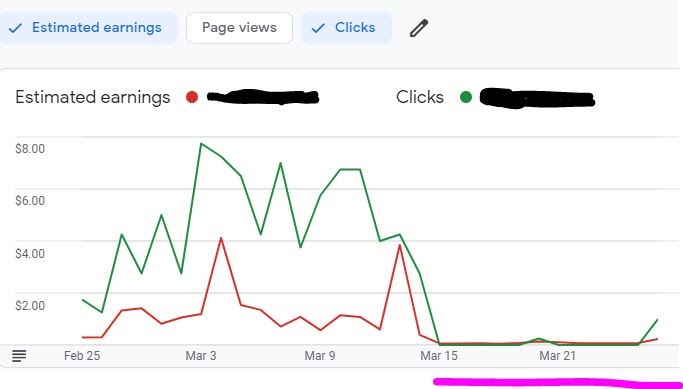
Pattern C: Sudden drop across a specific date
Revenue was normal, then dropped sharply on or around a specific date without a corresponding traffic change. This pattern points either to a platform-level event, an ad serving policy change, or a site-specific policy action on that date.
Identifying which pattern describes your situation determines which section of this guide applies to your account.
Pattern A: RPM Dropped With Stable Traffic (Demand-Side Causes)
The January 2026 Platform Crisis and Its Lasting Effects
The most significant single event affecting AdSense RPM in 2026 was a platform-level failure that began January 13. Google Ad Manager and AdSense experienced simultaneous technical disruptions beginning January 13, 2026, triggering revenue declines of 50 percent to 90 percent for publishers worldwide. AdSense publishers reported dramatic drops in eCPM and RPM metrics alongside decreased ad coverage percentages.
The core issue centered on Ad Exchange match rates. During normal operations, AdSense maintains match rates above 90 percent, meaning more than 9 out of 10 ad requests receive an advertisement. During the January crisis, coverage dropped from 92 to 93 percent to 81 percent or lower within 24 hours.
Google confirmed the issue and resolved it January 15, 2026, describing it as a technical glitch. However, the underlying decline in AdSense earnings had been building for months before that and has continued since.
If your RPM dropped in January 2026 and recovered partially but not fully, you experienced the platform crisis recovery that many publishers are still navigating. The platform crisis explains the acute drop. The structural causes below explain why baseline RPM has remained lower than pre-2025 levels for many publishers.
Programmatic Spend Consolidation
Agencies and DSPs shifted 2026 budgets toward private marketplace and programmatic guaranteed deals and away from the open exchange. For publishers without direct deals, this meant the pool of advertisers bidding on AdSense inventory shrank, and with less competition, CPMs fell.
This is an industry-wide structural shift rather than an account-specific problem. It affects all publishers relying on open exchange demand, and it does not respond to site-level changes. Publishers most exposed to this shift are those with general content audiences that do not fit a specific advertiser vertical precisely enough to attract PMP interest.
The CPC to CPM Transition
The CPC-to-CPM switch Google rolled out changed how publishers earn. Publishers used to earn per click. A niche site with an engaged audience could pull decent revenue even on modest traffic. Now you get paid per impression. Without serious volume, earnings become microscopic.
Fill rates for general content inventory dropped noticeably across most categories because Google restructured its display ad auction to weight placements with proven conversion outcomes more heavily. Performance advertisers now win a larger share of auctions than content publishers whose visitors are browsing rather than buying.
Publishers who saw RPM decline without a corresponding drop in CTR are experiencing this auction dynamic. The fix is not adjusting ad placement. It is improving the specificity of your content verticals to attract category-specific advertiser interest at higher CPMs.
AI Overviews and Zero-Click Search Impact
AI Overviews take the click from a search result before it reaches your site. Traffic drops, which means fewer impressions. Add to that: zero-click searches already make up roughly 58 to 60 percent of all Google queries.
Publishers in informational content niches where AI Overviews are most common are seeing both traffic decline and RPM pressure simultaneously. The response for this cause is not an AdSense-side adjustment. It is a content strategy adjustment toward queries where AI Overviews are less prevalent and where user intent requires visiting a source.
Pattern B: Impressions Dropped (Traffic-Side and Technical Causes)
Lazy Loading Misconfiguration
Lazy-loaded ads only fire their impression when they enter the viewport. If lazy loading is set too aggressively, many impressions are never counted on fast scrollers. AdSense sees fewer impressions while RPM math stays the same but total revenue falls.
Check your lazy loading configuration against Google's recommended settings. If renderMarginPercent is set too conservatively, ads below the fold are never triggering impressions for users who scroll quickly or who navigate to a different page before reaching those positions.
Viewability Below 50 Percent
Advertisers pay premium rates for impressions that are actually seen. If your ad placements have shifted due to a theme update, a layout change, or Core Web Vitals optimization that moved content around, viewability may have dropped below the threshold that attracts premium demand. Low viewability reduces effective RPM by reducing advertiser willingness to bid for your inventory.
Bot Traffic Ghost Attack
Ghost attacks within Analytics show no traffic going through Cloudflare, loading only Analytics and possibly AdSense, and doing nothing else, which drops RPM because the sessions generate impression pings without genuine engagement.
If your Analytics sessions per user ratio has increased, average session duration has dropped, and bounce rate has spiked, a bot traffic injection may be loading your ad units without the engagement that maintains RPM. Block suspicious IP ranges and check Analytics for the source geographic distribution of the anomalous traffic.
Organic Traffic Loss from Search Algorithm Updates
An unacknowledged Google search update affecting your site's rankings produces an impression drop that looks like an AdSense problem but is actually a search visibility problem. Check Google Search Console for impressions and clicks in the period corresponding to your AdSense drop. If Search Console impressions declined at the same time as AdSense impressions, the cause is search visibility, not ad configuration.
Pattern C: Sudden Drop on a Specific Date (Platform or Policy Causes)
Platform-Level Events
The January 13, 2026 disruption produced revenue declines of 50 to 90 percent for publishers worldwide within 24 hours. The impact was concentrated on Web and mWeb display inventory. If your drop date corresponds to a reported AdSense or Google Ads infrastructure event, the cause is platform-side and the correct response is to wait for resolution rather than make site changes.
Check the Google Ads Status Dashboard and AdSense help forum threads for dates corresponding to your drop. A platform event that affected publishers globally will produce forum threads within hours. If your drop date aligns with a reported event, you are in recovery from a platform issue rather than experiencing an account-specific problem.
Ad Serving Policy Action
A sudden drop on a specific date that does not correspond to a platform event and does not show up in the AdSense status pages may reflect a policy action on your account. Check your Policy Center for any new notifications. An ad serving limit placed on the account reduces impressions immediately and without advance notice. The previous article on ad serving limits covers the diagnostic and recovery process for this specific scenario.
What Not to Do When AdSense Earnings Drop
The most common responses to an earnings drop are the ones most likely to make it worse or delay recovery.
Do not toggle Auto Ads off and on repeatedly. Reacting by toggling Auto Ads on and off repeatedly, or panic-switching ad placements every few days will usually make things worse, not better. Frequent configuration changes interrupt the data collection that Google's optimization systems use to improve ad matching on your site.
Do not assume the drop is your fault if impressions are stable. A stable impression count with declining RPM is a demand-side signal. There is nothing wrong with your site or your traffic. The fix, if there is one, is in content positioning and audience specificity rather than ad configuration.
Do not change ad density in response to a platform-level crisis. Publishers who reduced ad density during the January 2026 crisis to protect user experience compounded the revenue loss without addressing the cause. Once the platform issue resolved, their lower ad density continued to suppress recovery.
The 2026 AdSense Earnings Context: What Persistent Decline Means
Publishers experiencing persistent RPM decline through 2026 are operating in a structurally different environment than 2023 or 2024. Thousands of publishers saw AdSense revenue fall between 20 and 50 percent during the first quarter of 2026, and the drops have continued. Some reasons are industry-wide, including Privacy Sandbox rollout, programmatic spend consolidation, and content category re-weighting. Others are specific to individual sites, including invalid traffic flags, ad density policy hits, ads.txt errors, and category drift.
Separating the structural from the fixable is the most important analytical step for a publisher facing persistent decline. Structural factors require strategic responses. Account-specific factors require technical remediation. Applying a technical fix to a structural problem, or waiting for market recovery when the real issue is an account-specific flag, produces six months of confusion and continued revenue pressure.
Run the diagnostic. Identify the pattern. Apply the response that matches the cause.

