Niche Choice Is a Risk Decision as Much as a Revenue Decision
RSOC stands for Related Search on Content, a format within Google's AdSense for Search that shows related search terms inside a content page. Most guides on the best niches for RSOC rank topics by how much advertisers might pay. That is only half of the question. RSOC is one of the more tightly controlled products in the AdSense family, and the topic you choose affects how much scrutiny your pages receive, how many advertisers can bid, and how easily a small mistake can become a strike. This article sorts niches into green, yellow, and red zones with policy risk in mind. It does not quote CPC figures, because published numbers are rarely comparable, and it does not suggest any tactic that conflicts with Google's rules. Policies change, so verify details in your own account before acting.
The Rules That Shape Every Niche
Several points from Google's documentation and policy notices apply no matter which topic you pick. To use related search on content pages, you need to complete the contracting steps for AdSense for Search, which Google says requires contacting your account manager. Google introduced site level approval for AdSense for Search in March 2024. Starting August 25, 2025, advanced tools in AdSense for Search became restricted features, available only to publishers who meet eligibility and policy standards. Under that system, five in scope policy violations count as one strike, a single egregious violation can also trigger a strike, and strikes cannot be appealed, although individual violations can be. Google also reminded publishers that deceptive implementation methods to obtain clicks or views on RSOC pages are prohibited, including misleading claims about traffic sources or on the page itself, and that the AdSense for Search code may not be modified or framed. Because these rules apply across topics, the first filter on any niche is whether you can follow them consistently.
How to Read the Map
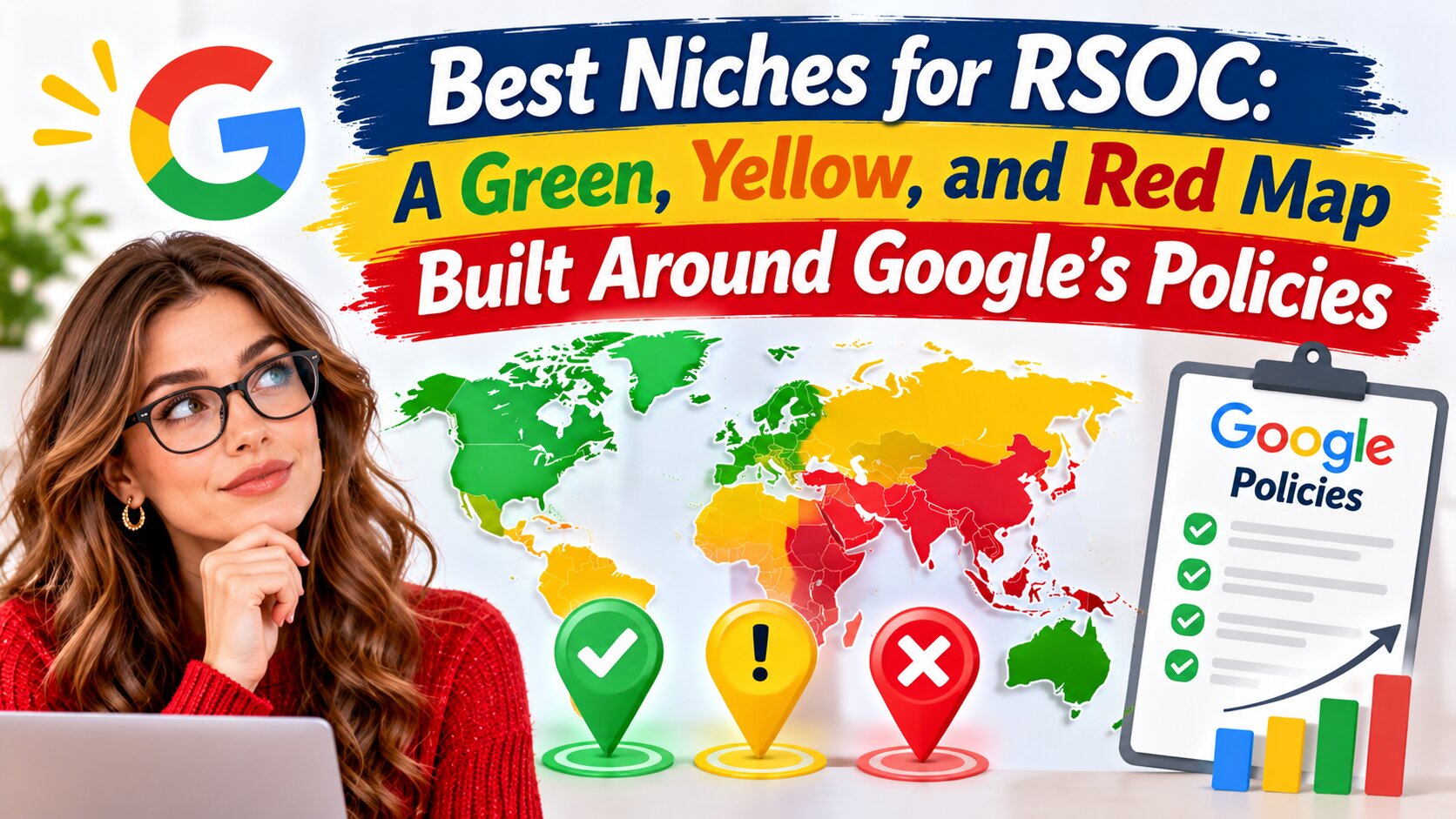
Green means the topic is broadly informational, the content is easy to make accurate and original, and advertiser categories are mainstream and lightly restricted. Yellow means the topic can work, but it carries sensitivity, so you need stronger editorial standards and more caution. Red means avoid it, either because the content falls into categories Google restricts or because the niche is so closely tied to risky practices that safe execution is unrealistic. No color is a guarantee. A careless site in a green niche can earn strikes, and a careful site in a yellow niche can run safely.
The Green Zone: Informational Topics With Mainstream Demand
Home maintenance and repair is a natural fit. Readers searching for how to fix, install, or maintain something have clear intent, the content can be practical and original, and many home related advertisers compete for attention. Consumer technology help and software how to guides work in a similar way, with plenty of useful content and broad advertiser interest. Travel planning, automotive upkeep, pets, and general hobbies and do it yourself projects also tend to sit in this zone, since the content is informational and sensitivity is low. Career skills and training topics that stay factual rather than promising outcomes can sit here as well. These niches are not automatically high paying. They are simply easier to make compliant, which matters more than a single month's rates.
The Yellow Zone: Valuable Topics That Demand Extra Care
Personal finance, insurance, and loans often attract strong advertiser demand, and they are also heavily regulated areas where misleading claims can harm readers. Health and wellness is similarly attractive and sensitive, since unsupported medical claims, miracle cures, and exaggerated results are exactly what policies target. Legal information, education and degree programs, and topics about jobs and income sit in the same space. Content in these niches should be accurate, clearly sourced, and written or reviewed by someone with real expertise, and it should avoid promising results or guaranteeing outcomes. If you cannot afford that level of editorial work, the yellow zone is a poor place to test RSOC.
The Red Zone: Avoid These for RSOC
Content in categories Google restricts or prohibits for publishers, such as adult content, dangerous or derogatory content, illegal or counterfeit products, and deceptive material, should be avoided. Google's own documentation notes that content in scope of its publisher restrictions may receive less advertising even when it is allowed on a page. Other red zone topics include anything built on miracle claims, get rich quick promises, or fake urgency, as well as shock and clickbait style topics designed to provoke clicks. Beyond the topic itself, a niche is also red if you plan to run it only by funneling visitors to search results with little real content.
Practices That Turn Any Niche Red
Some of the most serious risks come from how a site operates, not what it covers. Misleading claims about where traffic comes from, creative that promises one thing while the page delivers another, scraped or thinly rewritten content, pages built mainly to push readers into the related search block, and any attempt to modify, frame, or disguise the search code can all lead to violations, whatever the topic. If a plan depends on tricking visitors into clicking, no niche will make it safe. A related point is traffic quality. Our overview of how location changes earnings shows why audience mix affects results, and honest sources of traffic are an essential part of staying within the rules.
High CPC Is Not the Same as High RSOC Income
Searches for high CPC niches for RSOC usually point to insurance, loans, legal services, and similar topics. Advertiser competition in those areas is often strong, but the leap from high CPC to high income has several breaks in it. Revenue also depends on how many visitors interact with related searches, how relevant the terms are to the page, and how well the traffic matches what advertisers want. Sensitive categories can also have fewer eligible advertisers because of restrictions on what ads may say. Finally, one avoidable violation can cost more than a month of higher rates. Treat CPC as one input, not the decision.
Moving a Niche From Yellow Toward Green
You can reduce risk in a sensitive niche with better editorial practice. Use named, qualified authors or reviewers, cite reliable sources, avoid absolute claims, add clear disclaimers where appropriate, and keep advertising distinct from content. Publish enough original material that each page would be useful without the search block. Keep the page's promise and the page's content aligned, and describe the source of your traffic honestly. These habits protect readers, and they also protect your account.
Questions to Answer Before You Commit
Do you have access to AdSense for Search through the proper approval process? Can you create original, accurate content at the scale you plan? Does your traffic come from sources you can describe truthfully? Will you track outcomes by source, page, and country so you can see what works? Our article on ad revenue attribution with one reader and three lenses explains how to read those numbers without fooling yourself. And do you have a plan for what happens if a restricted feature is lost? If any answer is unclear, start smaller or choose a greener niche.
The Takeaway
The best niche for RSOC is not simply the one with the highest advertiser demand. It is the one where you can produce honest, useful content, meet Google's rules every day, and measure results clearly. Start in the green zone, move into yellow only with real editorial resources, and stay out of red. A modest, compliant operation that lasts is worth more than a high rate that ends in a lost account.