RSOC search arbitrage has become one of the most discussed monetization models in digital marketing. As older formats like AdSense for Domains (AFD) phased out, many publishers and media buyers shifted toward content-based search monetization. In this guide, we explain what is RSOC search arbitrage, how the model works, and address the important question: Is traffic arbitrage legal?
What Is RSOC Search Arbitrage?
RSOC stands for Related Search on Content. It is a Google AdSense for Search format that displays relevant search suggestions inside real content pages (articles, guides, or comparison pages).
When a visitor clicks one of those suggested search terms, they are taken to a search results page that contains ads. The publisher earns a share of the revenue from those ad clicks.
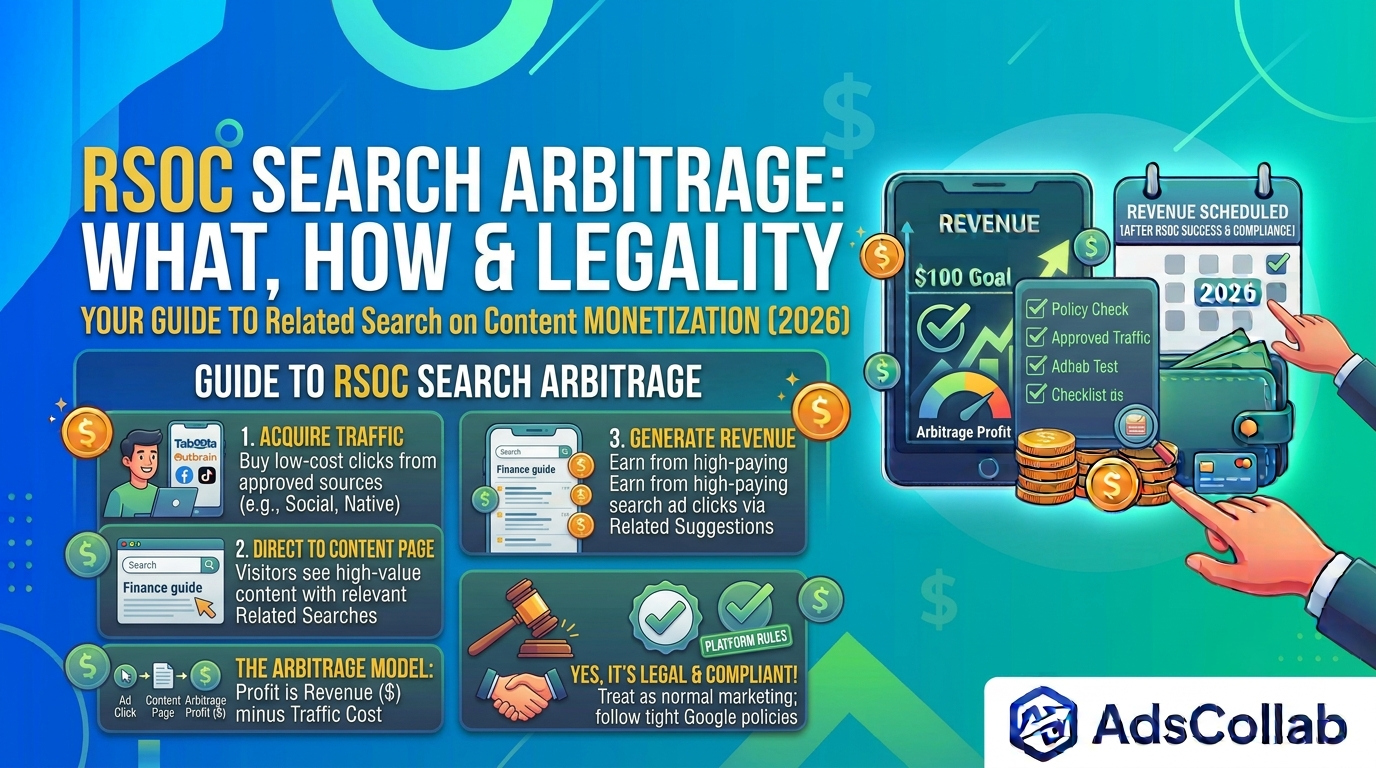
Search arbitrage (also called RSOC arbitrage) is the business model built on top of the Related Search on Content product. In this model, a marketer buys paid traffic from platforms such as Facebook, TikTok, Taboola, or Outbrain at a relatively low cost per click. That traffic is then directed to a content page that contains RSOC units.
On the page, some visitors click the related search suggestions. Those clicks lead to monetized search results pages, which generate higher-paying search ad revenue. The difference between the cost of acquiring the traffic and the revenue earned from the search ads becomes the profit — this is the core of the arbitrage.
In short: RSOC is the monetization product. Search arbitrage is the strategy of buying traffic to feed into it.
How RSOC Search Arbitrage Works in Practice
A typical compliant flow looks like this:
A typical compliant RSOC flow begins when a user clicks an ad on a social or native advertising platform. They are then directed to a real, useful content page — such as a guide about insurance, finance, or product comparisons.
On that page, the content answers the user’s question while also displaying relevant related-search suggestions. If the visitor clicks one of those suggestions, they are taken to a monetized search results page. The publisher earns revenue when the user interacts with the ads shown on that results page.
The model only works sustainably when the content provides genuine value and the traffic sources comply with both the ad platform’s rules and Google’s policies.
Is Traffic Arbitrage Legal?
Yes, search arbitrage / traffic arbitrage is generally legal in most countries, including the United States, UK, and EU.
However, legality and platform compliance are two different things:
- Legality
Buying traffic and monetizing it through legitimate ad products is not illegal in itself. It is treated as a normal digital marketing and publishing activity. - Platform rules
Google, Meta, TikTok, and native ad networks all have strict policies. Violating those policies can result in account bans, feed suspensions, or loss of monetization access — even if the activity is legal under general law.
Google requires that RSOC pages contain real editorial content, avoid misleading designs, and maintain acceptable traffic quality. Practices such as thin content, incentivized clicks, or deceptive layouts are not allowed.
Important Considerations and Risks
While the model can be profitable, it also carries risks:
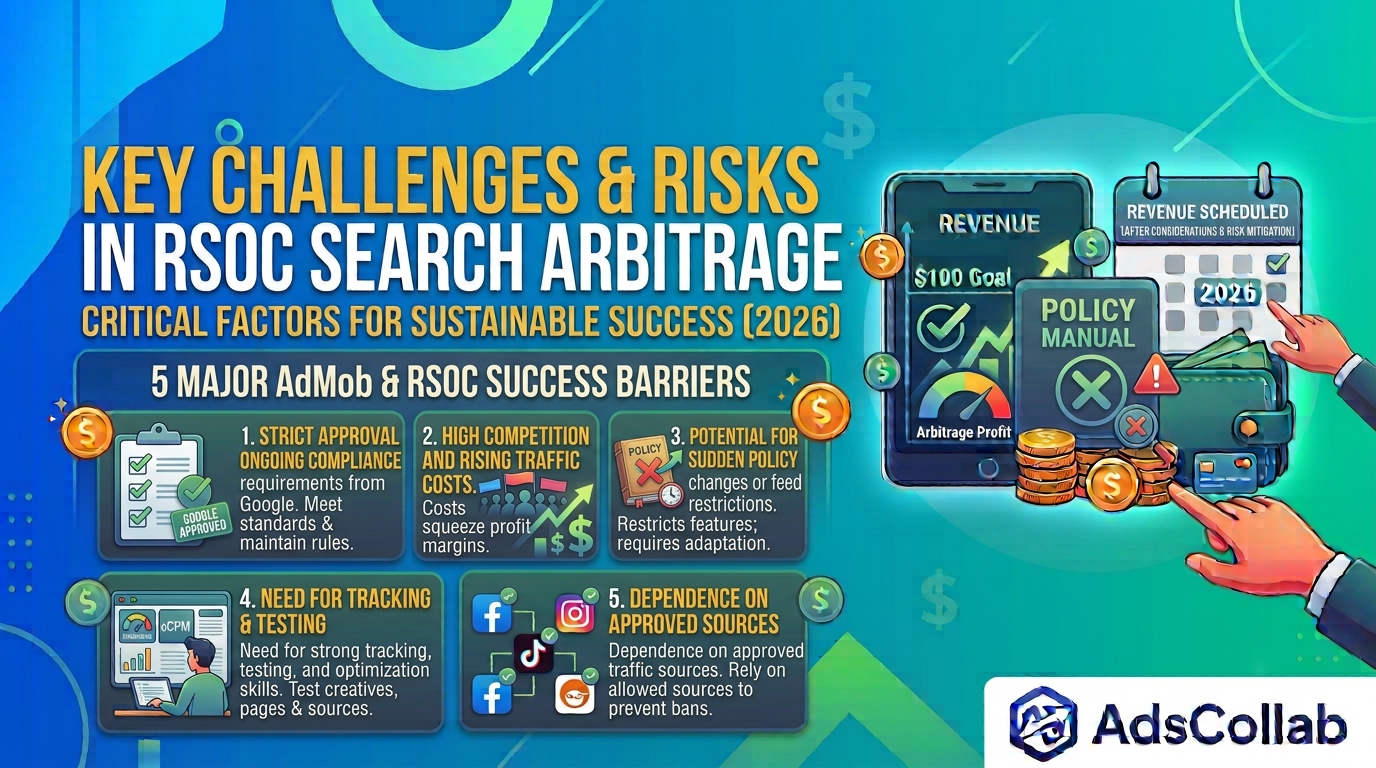
While RSOC search arbitrage can be profitable, it also comes with several important challenges and risks that operators should carefully consider before scaling.
- Strict approval and ongoing compliance requirements from Google
Access to RSOC is not automatic. Publishers must meet Google’s quality and policy standards to get approved, and they must continue following those rules after approval. Any significant policy violation can lead to reduced access, limited features, or complete loss of the feed.
- High competition and rising traffic costs
As more marketers enter the RSOC space, competition for quality traffic increases. Popular traffic sources such as Facebook, TikTok, and native networks often see rising costs per click, which can shrink profit margins if campaigns are not carefully optimized.
- Potential for sudden policy changes or feed restrictions
Google periodically updates its policies and may restrict certain features or traffic sources with little notice. These changes can quickly affect campaign performance and force operators to adapt their strategy or rebuild parts of their funnel.
- Need for strong tracking, testing, and optimization skills
Successful RSOC arbitrage requires continuous testing of creatives, landing pages, and traffic sources. Without accurate tracking and the ability to analyze performance data, it becomes difficult to identify what is profitable and what is losing money.
- Dependence on approved traffic sources
Not all traffic is accepted. Operators must rely on traffic sources that comply with both the ad platform’s rules and Google’s requirements. Using non-approved or low-quality traffic can result in account or feed issues.
Success in RSOC search arbitrage usually depends more on operational discipline and compliance than on simply buying cheap traffic.
Final Thoughts
RSOC search arbitrage is a content-driven monetization model that replaced older domain-parking approaches. When done correctly — with real value for users and full policy compliance — it remains a viable strategy for experienced media buyers and publishers.
However, it is not a “set and forget” method. Continuous testing, quality content, and careful adherence to platform rules are essential for long-term results. For more guides on RSOC, search monetization, and related strategies, you can visit adscollab.com.
Have you experimented with RSOC or search arbitrage? Share your experience or questions in the comments below.

