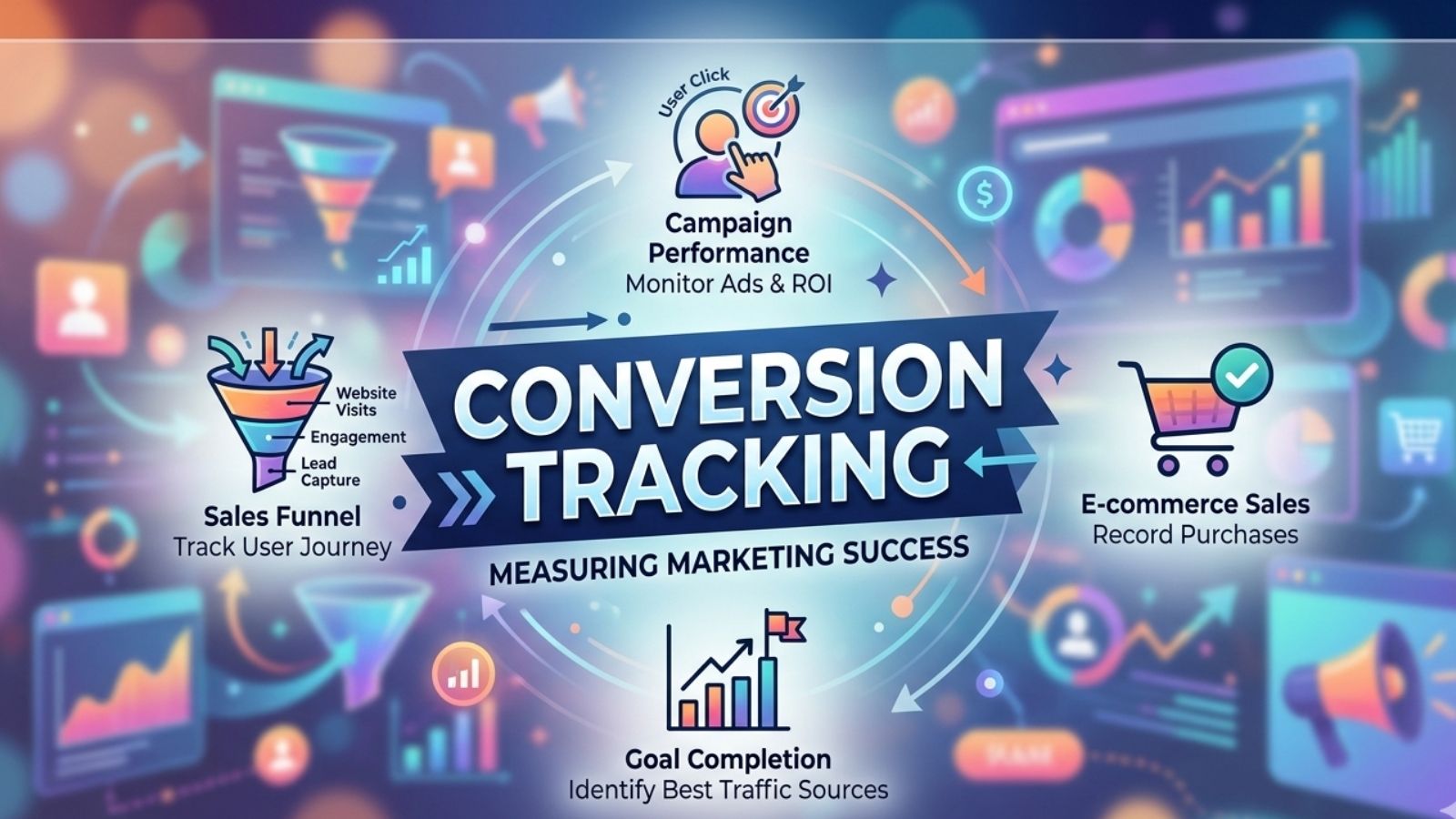
Welcome to AdsCollab (adscollab.com), your collaborative advertising platform that connects publishers and advertisers with premium demand partners, header bidding integrations, and advanced analytics to optimize performance and revenue in a privacy-first world. In 2026, accurate conversion tracking best practices are essential for attributing results correctly, fueling AI-driven bidding, and maximizing ROI amid cookie deprecation, stricter regulations, and fragmented user journeys—making robust tracking the foundation of effective programmatic and paid advertising strategies.
Conversion tracking measures user actions that drive business value, such as purchases, sign-ups, leads, or app installs, linking them back to ad touchpoints. In 2026, with third-party cookies largely phased out and privacy laws tightening globally, traditional pixel-based methods fall short. Conversion tracking best practices 2026 emphasize first-party data, server-side implementations, enhanced conversions, consent management, and hybrid attribution to deliver reliable signals for optimization without compromising user trust.
The Evolution of Conversion Tracking in 2026
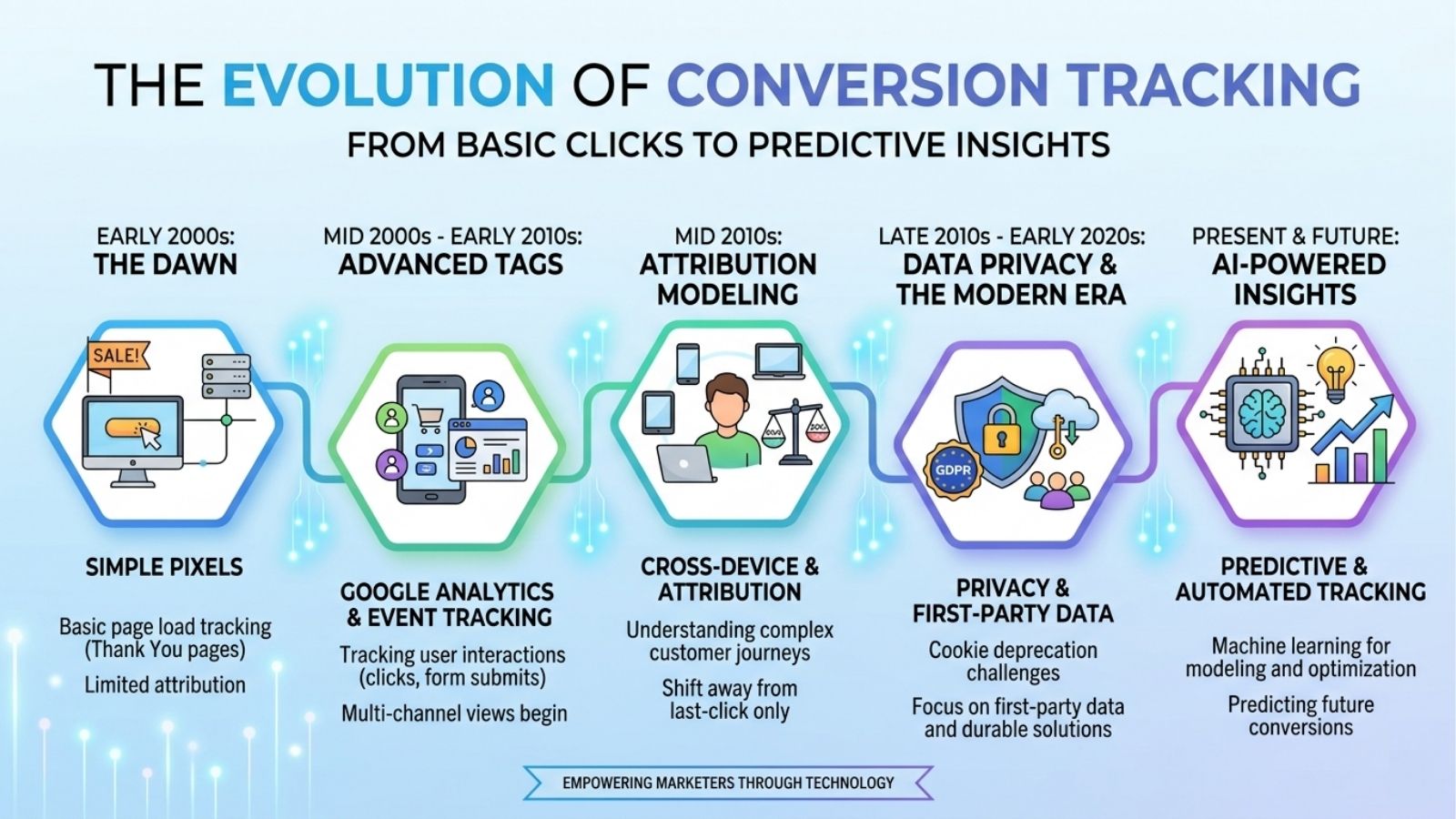
Conversion tracking has shifted from simple pixel fires to sophisticated, privacy-compliant systems. Google's Privacy Sandbox, Apple's ATT framework, and regulations like GDPR and CCPA force marketers to rely on consented first-party data and modeled attribution. Platforms prioritize accurate, hashed user signals over probabilistic methods.
Key drivers include AI bidding (Performance Max, Smart Bidding) that learns exclusively from conversion data—poor tracking leads to suboptimal spend allocation. Server-side tracking and enhanced conversions bridge gaps from ad blockers, iOS restrictions, and cross-device behavior, improving match rates by 10-30% in many cases.
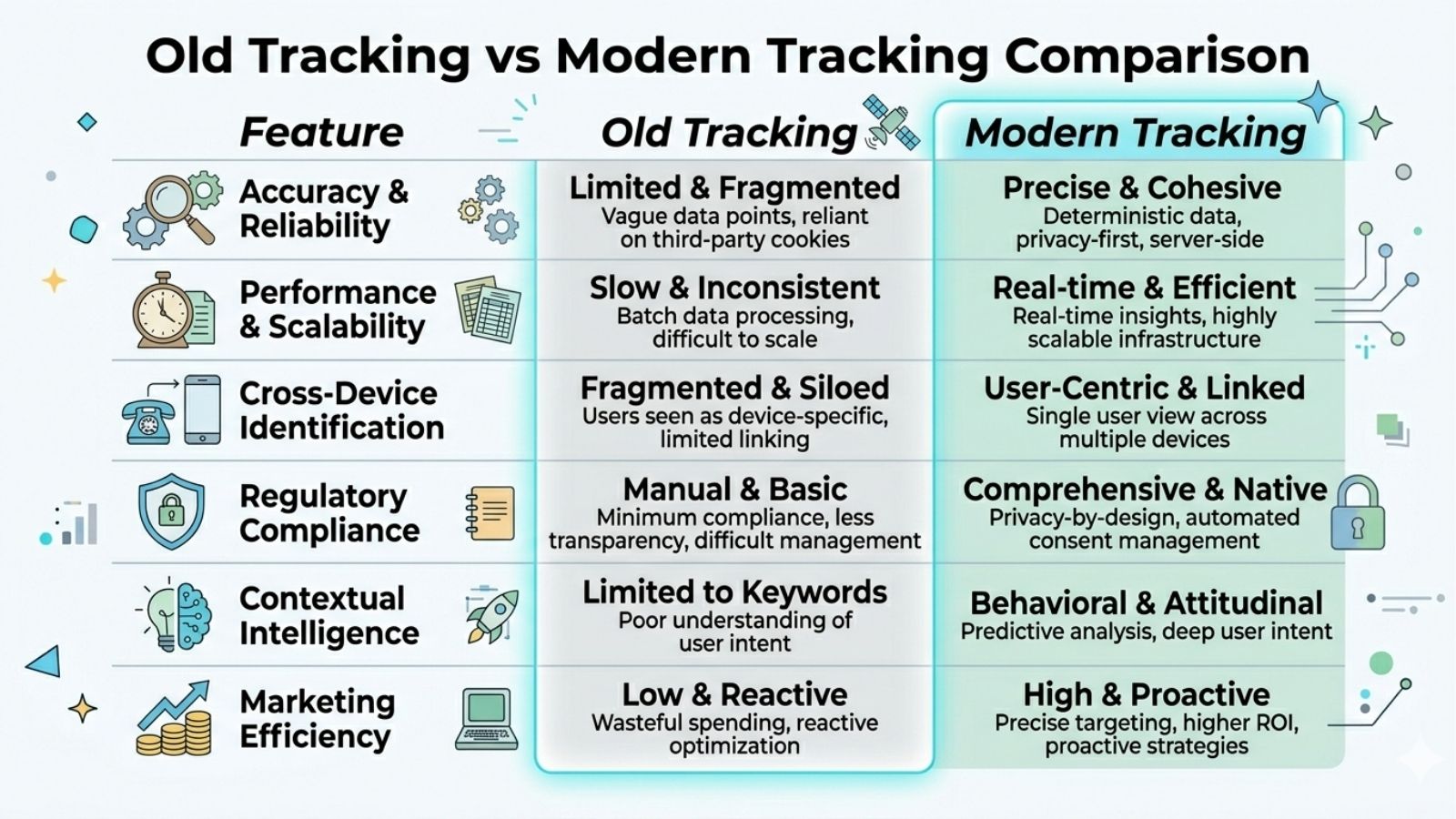
Comparison Table: Old Tracking vs Modern Tracking
Why Accurate Conversion Tracking Matters in 2026
Reliable data powers better bidding, audience building, and ROI measurement. Inaccurate tracking inflates costs per acquisition, misattributes revenue, and limits scaling. Publishers using programmatic ads see higher CPMs from credible performance signals, while advertisers optimize toward true value (e.g., high-LTV customers).
In a cookieless era, strong tracking maintains visibility in zero-click environments and supports value-based bidding, where differentiated conversion values guide algorithms toward revenue-focused outcomes.
| Feature | Traditional Tracking | Modern Tracking 2026 |
|---|---|---|
| Data Source | Third-party cookies | First-party data |
| Method | Pixel-based | Server-side + hybrid |
| Accuracy | Low–medium | High |
| Privacy Compliance | Weak | Strong |
| AI Compatibility | Limited | Fully optimized |
| Cross-device Tracking | Poor | Advanced |
1. Implement Enhanced Conversions and First-Party Data Hashing
Enhanced Conversions are non-optional in 2026 for Google Ads and similar platforms. Hash and send first-party user data (email, phone, address) securely at conversion time to improve matching without cookies.
Best practices include collecting consented data via forms or logins, using SHA-256 hashing, and enabling features in Google Ads/GA4. This boosts accuracy for web and leads, especially in privacy browsers.
2. Adopt Server-Side Tracking as the Primary Method
Server-side tracking (via tools like Google Tag Manager Server, Stape, or custom APIs) sends events from your backend/CRM to platforms, bypassing client-side limitations like ad blockers and iOS restrictions.
Route core events server-side first, using pixels as fallback. This preserves data integrity, reduces signal loss, and supports offline conversions (e.g., CRM uploads for closed-won deals). Combine with consent management to stay compliant.
3. Use Google Tag Manager for Centralized Deployment
Deploy all tags (Google Ads, GA4, remarketing) through GTM for control and easy updates. Set up server-side GTM containers for enhanced security and performance.
Validate setups in preview mode, use recommended events where possible, and follow GA4 naming conventions for custom events to ensure clean data flow.
4. Define and Prioritize Valuable Conversion Actions
Track business-impacting actions: macro conversions (purchases, sign-ups) and micro conversions (add-to-cart, newsletter subscribe) with proper values.
Assign differentiated values for value-based bidding—e.g., higher for high-LTV leads. Import offline conversions to close the loop, teaching algorithms what drives revenue.
5. Leverage Consent Management and Privacy-Compliant Tools
Explicit consent is mandatory—use CMPs to gate tracking. Treat consent as a strategic layer for quality first-party data activation.
Implement privacy-safe alternatives: clean rooms for partnered data, contextual signals, and universal IDs (UID2) where users opt in.
6. Set Up Cross-Device and Cross-Channel Attribution
Users switch devices—use user-provided signals and modeled attribution in GA4/Google Ads for holistic views. Layer first-party data to strengthen signals across platforms.
Monitor multi-touch journeys and use data-driven models over last-click for realistic insights.
7. Regularly Audit and Fix Tracking Gaps
Audit setups quarterly: check pixel firing, event accuracy, and discrepancies between platforms. Use tools like Google Tag Assistant or debuggers to identify issues.
Fix gaps from iOS, ad blockers, or misconfigurations promptly. Test end-to-end with real scenarios.
Best For: Who Needs Advanced Tracking Most?
Conversion tracking best practices 2026 are critical for:
- E-commerce stores
- Lead generation websites
- SaaS businesses
- Affiliate marketers
- Publishers using programmatic ads
👉 If you run ads → you NEED accurate tracking
How AdsCollab Helps You Track Better
At AdsCollab, we provide:
- Advanced tracking integrations
- Analytics & reporting systems
- Server-side setup support
- Monetization optimization tools
👉 Explore https://adscollab.com
👉 Learn about tracking solutions
👉 Or https://www.adscollab.com/contact for support
FAQ
What is conversion tracking?
Tracking user actions like purchases or sign-ups.
Why is conversion tracking important in 2026?
Because privacy changes reduce traditional tracking accuracy.
What is server-side tracking?
Tracking events from backend instead of browser.
What are enhanced conversions?
Hashed first-party data used to improve tracking accuracy.
Is conversion tracking still reliable without cookies?
Yes—if you use modern methods.
Challenges in Conversion Tracking 2026 and Solutions
Signal loss from privacy tools persists—counter with server-side and enhanced methods. Attribution complexity in multi-channel funnels requires unified views via GA4 or CDPs.
Over-reliance on one platform risks bias—diversify sources and use independent analytics.
How AdsCollab Enhances Conversion Tracking Strategies
AdsCollab (adscollab.com) supports conversion tracking best practices 2026 with tools for demand connections, analytics integration, and hybrid setups that respect privacy while maximizing insights. Our platform helps publishers and advertisers align tracking with revenue goals through clean data flows and performance optimization.
Conclusion
Mastering conversion tracking best practices 2026 means embracing first-party data, server-side methods, enhanced conversions, and consent-driven strategies to fuel accurate attribution and AI optimization. Implement audits, prioritize value signals, and adapt to privacy changes for sustained performance. Visit AdsCollab.com to explore collaborative tools that complement robust tracking and drive measurable growth in programmatic advertising.

