In 2026, ecommerce marketing is no longer optional — it's the engine that determines whether an online store survives or scales. With global ecommerce revenue projected to surpass $7 trillion this year, the competition for consumer attention and wallet share has never been fiercer. Brands that treat ecommerce marketing as a strategic, multi-channel discipline are growing. Those that approach it reactively are losing ground to competitors who plan ahead.
This guide is your complete playbook for ecommerce marketing in 2026 — covering every major channel, tactic, and trend you need to attract more traffic, convert more buyers, and build the kind of customer relationships that drive sustainable long-term growth.
What Is Ecommerce Marketing and Why Does It Matter in 2026?
Ecommerce marketing is the full set of strategies, channels, and tactics used to promote an online store — attracting visitors, converting them into customers, and encouraging them to return. It spans organic and paid channels, covers the full customer lifecycle, and operates across search engines, social platforms, email inboxes, and beyond.
What makes ecommerce marketing in 2026 particularly demanding is the volume of touchpoints a customer interacts with before making a purchase. Research consistently shows that modern buyers encounter a brand six to eight times before converting. That means effective ecommerce marketing must work across multiple surfaces simultaneously — not just push traffic to a homepage and hope for the best.
The cost of acquiring new customers has also risen sharply across industries, making it more important than ever for ecommerce marketing strategies to balance acquisition with retention. Brands that think only about getting new visitors are spending far more than those who also invest in keeping the customers they already have.
Search Engine Optimization for Ecommerce Stores
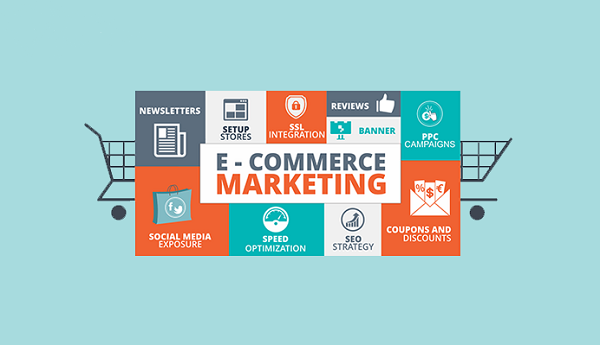
Organic search remains one of the most valuable and cost-efficient traffic sources in ecommerce marketing. A well-optimized product or category page that ranks on the first page of Google captures high-intent buyers at the exact moment they're ready to purchase — without paying for every click.
Core SEO Tactics for Ecommerce Marketing in 2026
Product Page Optimization Every product page in your store is a potential SEO landing page. Write original, keyword-rich product titles and meta descriptions for every SKU. Avoid duplicating manufacturer copy — unique descriptions are both better for SEO and more persuasive for shoppers.
Category Page SEO Category pages are the most underutilized asset in ecommerce marketing. A well-written introductory paragraph on each category page that naturally incorporates target keywords can significantly lift organic rankings for high-volume commercial search queries.
Core Web Vitals and Technical SEO In 2026, Google's ranking algorithms continue to weight page experience heavily. Fast load times (especially on mobile), stable layouts, clean URL structures, and structured data markup for products, reviews, and pricing are baseline requirements for competitive ecommerce SEO.
AI-Assisted Content Strategy A growing number of ecommerce marketing teams are using AI tools to identify content gaps, generate keyword clusters, and scale blog production. The brands seeing results pair AI efficiency with genuine editorial quality — informative, original content that answers real customer questions and earns organic backlinks over time.
Voice and Conversational Search With smart home devices and AI assistants now embedded in daily life, optimizing product content for conversational, long-tail queries is a meaningful ecommerce marketing advantage that many brands have yet to fully exploit.
Social Commerce: The Fastest-Growing Ecommerce Marketing Channel
Social media has transformed from a brand awareness tool into a direct ecommerce marketing and sales channel. In 2026, social commerce — the ability to discover, browse, and purchase products without leaving an app — is mainstream across every major platform.
Platform-by-Platform Ecommerce Marketing Strategy
TikTok Shop TikTok has become one of the most powerful ecommerce marketing platforms available. Short-form video content drives product discovery at a scale and speed no other platform currently matches. TikTok Shop's in-video purchase functionality has collapsed the journey from discovery to transaction into a matter of seconds. Brands that invest in creator partnerships and authentic product content here are seeing remarkable ecommerce returns.
Instagram and Facebook Shops Meta's commerce ecosystem remains essential for ecommerce marketing, particularly in lifestyle, fashion, beauty, home, and food categories. Shoppable Reels, Stories, and carousel posts create multiple paths to purchase within a single piece of content. Meta's retargeting capabilities also make it the platform of choice for re-engaging site visitors who didn't convert.
Pinterest for Ecommerce Pinterest functions as a visual search engine where users actively look for ideas and products to buy — making it a uniquely high-intent ecommerce marketing channel. Product Pins that link directly to your store capture demand from buyers who are already in discovery mode. For weddings, home improvement, fashion, and food brands, Pinterest remains a remarkably underused ecommerce opportunity.
YouTube Shopping YouTube's integration of shoppable product overlays into video content has opened a significant new ecommerce marketing channel. Tutorial videos, product reviews, and comparison content with embedded purchase links are driving measurable ecommerce revenue for brands that invest in long-form video.
Content Formats That Drive Ecommerce Conversions on Social
- Authentic unboxing and first-impression videos
- User-generated content (UGC) repurposed with creator permission
- Side-by-side product comparisons
- Customer transformation or before-and-after storytelling
- Behind-the-scenes production and sourcing content that builds brand trust
Email Marketing: The Highest-ROI Channel in Ecommerce Marketing
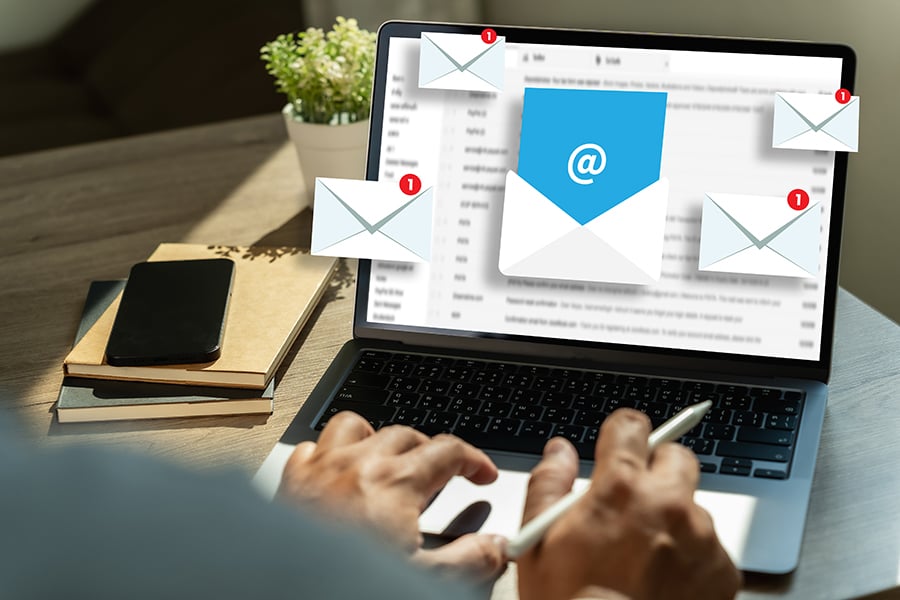
Despite the constant arrival of new platforms and formats, email marketing continues to deliver the strongest return on investment of any channel in the ecommerce marketing mix. The reason is structural: your email list is an owned asset. Unlike social media followers — who are subject to algorithm changes, platform policy shifts, and account restrictions — your subscribers are yours to communicate with directly.
Essential Email Flows for Ecommerce Marketing
Welcome Sequence A three-to-five email welcome series introduces new subscribers to your brand story, highlights your most popular products, and typically includes a first-purchase incentive. This sequence sets the tone for the entire customer relationship.
Abandoned Cart Recovery Cart abandonment is one of the largest sources of recoverable revenue in ecommerce marketing. A well-timed sequence of two to three emails — sent at one hour, 24 hours, and 72 hours after abandonment — brings a meaningful percentage of those shoppers back to complete their purchase. In 2026, SMS follow-up alongside email has become standard practice for high-performing ecommerce brands.
Post-Purchase Experience Emails The post-purchase period is one of the most overlooked opportunities in ecommerce marketing. A sequence that covers delivery confirmation, product tips or tutorials, a review request, and a cross-sell recommendation deepens the customer relationship and sets up the second purchase.
Replenishment and Reorder Reminders For consumable products — supplements, skincare, pet food, coffee — automated replenishment emails timed to typical purchase cycles are among the most efficient revenue drivers in ecommerce marketing automation.
Win-Back Campaigns Customers who haven't purchased in 60–90 days are at risk of permanent churn. A targeted win-back campaign with a compelling reason to return — a new product launch, a loyalty reward, or a personalized offer — can recapture a significant portion of lapsed buyers before they're gone permanently.
AI-Powered Personalization in 2026 The biggest shift in ecommerce marketing email strategy in 2026 is the mainstream adoption of AI-driven personalization. Platforms now dynamically generate individualized product recommendations, subject lines, and send times based on each subscriber's unique behavior — significantly outperforming static, one-size-fits-all campaigns.
Paid Advertising in the 2026 Ecommerce Marketing Landscape
Paid media remains a critical growth accelerator in ecommerce marketing, especially for new stores building organic reach or established brands entering new markets. The most effective ecommerce marketing ad strategies in 2026 combine search, social, and video across multiple platforms.
Google Performance Max for Ecommerce
Google's Performance Max campaigns use machine learning to serve ads across Search, Shopping, YouTube, Display, and Gmail simultaneously — optimizing in real time for the highest-converting placements. For ecommerce marketing teams, PMax has replaced traditional Shopping-only campaigns as the primary Google strategy.
Meta Advantage+ Shopping Campaigns
Meta's AI-driven shopping campaigns automate audience targeting and creative testing, reducing the manual workload for ecommerce marketing managers while often outperforming manually configured campaigns on ROAS.
Connected TV and Streaming Ads
A newer frontier in ecommerce marketing, connected TV advertising allows brands to serve video ads on streaming platforms with targeting precision similar to digital social ads. For mid-to-large ecommerce brands, CTV is emerging as an effective upper-funnel complement to lower-funnel search and social campaigns.
Essential Ecommerce Advertising Metrics
| Metric | What It Measures |
|---|---|
| ROAS | Revenue generated per dollar of ad spend |
| CPA | Total cost to acquire one new paying customer |
| CTR | Percentage of people who clicked the ad |
| Conversion Rate | Percentage of visitors who completed a purchase |
| LTV:CAC Ratio | Customer lifetime value vs. acquisition cost — the health metric every ecommerce marketing team should monitor |
Influencer and Creator Marketing for Ecommerce
Influencer marketing has matured significantly as an ecommerce marketing channel. In 2026, the most effective partnerships are those built on genuine product alignment rather than follower count alone.
Nano and micro-influencers (1,000–100,000 followers) often deliver higher engagement rates and stronger conversion signals than large celebrity accounts, at a fraction of the cost. An ecommerce brand selling specialty cooking equipment partnering with passionate home chefs reaches a precisely relevant, highly motivated audience.
Creator affiliate programs bridge the gap between influencer marketing and performance-based ecommerce marketing. Creators earn a commission on every sale they refer through unique tracking links — aligning incentives and making the economics transparent for both parties.
Long-term brand ambassador relationships are increasingly preferred over one-off sponsored posts. Repeated, authentic promotion from a trusted creator builds genuine brand equity in ways that a single sponsored story never could.
Conversion Rate Optimization: Turning Traffic Into Revenue
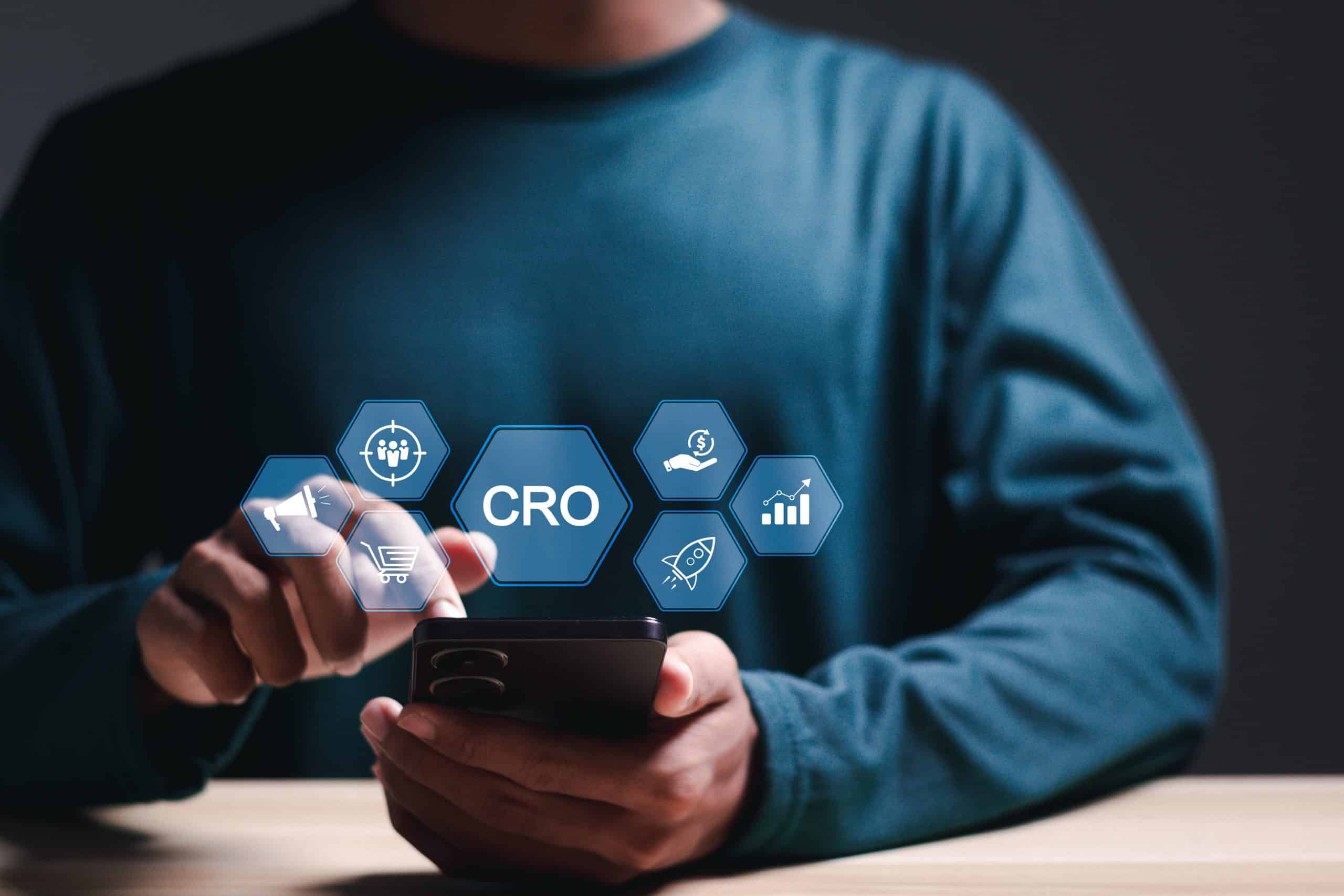
All the ecommerce marketing in the world only pays off if your store converts visitors into buyers. CRO is the discipline of systematically improving that conversion rate through testing and iteration.
High-impact CRO priorities for ecommerce marketing teams:
- Product photography quality — Multiple images per product, including lifestyle shots and zoom-enabled detail views, reduce purchase hesitation more than almost any other single factor
- Benefit-led product descriptions — Speak to outcomes, not specifications; tell the customer how their life improves with this product
- Prominent social proof — Display review counts, star ratings, and verified buyer testimonials directly adjacent to the add-to-cart button
- Frictionless checkout — Every additional step in checkout reduces completion rates; guest checkout, one-click purchase options, and saved payment credentials are ecommerce marketing fundamentals in 2026
- Live chat and AI support — Real-time answers to pre-purchase questions remove the final hesitation that prevents a sale
Customer Retention: The Ecommerce Marketing Multiplier
Retention is where ecommerce marketing creates its greatest long-term leverage. Acquiring a new customer costs five to seven times more than retaining one — yet most ecommerce marketing budgets weight heavily toward acquisition.
Loyalty programs that reward purchases, referrals, reviews, and social engagement create habitual buying behavior and genuine emotional connection to the brand. Paired with exceptional post-purchase communication, proactive shipping notifications, and a friction-free returns process, these programs compound customer lifetime value in ways that acquisition spending alone never can.
The ecommerce marketing brands that will dominate in 2026 and beyond are those that treat every customer not as a single transaction but as a relationship with a long future ahead of it.
Building a Unified Ecommerce Marketing Strategy
The most resilient ecommerce businesses in 2026 are multi-channel by design. Their ecommerce marketing systems are interconnected: SEO drives organic discovery, social commerce accelerates brand reach, email nurtures and converts, paid media fills gaps and accelerates growth, and retention programs extend the lifetime value of every hard-won customer.
The key is not to run each ecommerce marketing channel in isolation but to build a coherent customer journey where each channel reinforces the others. A customer might discover your brand through a TikTok video, research it on Google, subscribe to your email list for a discount, and make their first purchase from an abandoned cart recovery email. That's ecommerce marketing working as a system.
Conclusion
Ecommerce marketing in 2026 rewards brands that are strategic, data-informed, and genuinely customer-centric. The channels are evolving faster than ever — AI is reshaping personalization, social commerce is eliminating friction from discovery to purchase, and the bar for customer experience has never been higher.
But the fundamentals remain constant: understand your customer deeply, show up consistently across the channels where they spend time, deliver real value at every touchpoint, and invest as much in keeping customers as in finding new ones.
Approach ecommerce marketing as a long-term discipline rather than a series of short-term campaigns, and the results will compound in ways that transform your business.