Something fundamental has shifted in the global economy over the past decade — and it didn't begin with a government policy, a financial institution, or a Fortune 500 strategy session. It began with individuals: a makeup artist filming tutorials in her bedroom, a software developer recording coding walkthroughs on weekends, a personal finance enthusiast writing newsletters at midnight.
These creators — and the tens of millions who followed in their footsteps — have collectively built what analysts now call the Creator Economy: a vast, rapidly expanding ecosystem where individuals monetize their knowledge, creativity, personality, and audience at unprecedented scale.
By 2024, the creator economy had grown to an estimated $250 billion in value, with projections suggesting it could reach $480 billion or more by 2027. Over 200 million people worldwide identify as content creators today, and that number continues to accelerate as tools become cheaper, platforms multiply, and audiences increasingly seek authentic human voices over polished corporate content.
But the creator economy is not simply a story about social media influencers or YouTube stars. It is a fundamental restructuring of how human attention, expertise, creativity, and trust are converted into economic value. Understanding it — its origins, its architecture, its tensions, and its trajectory — has become essential for anyone navigating business, media, technology, or the future of work.
This is that understanding.
Part One: The Origins and Evolution of the Creator Economy

1.1 Before the Platforms: The Pre-Creator Economy
To understand where the creator economy is going, it helps to understand where it came from. Before the internet democratized publishing, the barriers to reaching an audience were prohibitively high. A writer needed a publishing house. A musician needed a record label. A filmmaker needed studio distribution. A journalist needed a newspaper. Talent was necessary but insufficient — institutional gatekeepers controlled access to audiences, and those gatekeepers extracted the majority of the economic value generated.
The early internet began dissolving these barriers. Blogging platforms in the late 1990s and early 2000s — Blogger, LiveJournal, WordPress — gave individuals the ability to publish to a global audience for free. Forums and message boards created communities around shared interests without institutional mediation. But monetization was rudimentary at best, and reaching large audiences still required significant luck or virality.
1.2 The Platform Era: 2005–2015
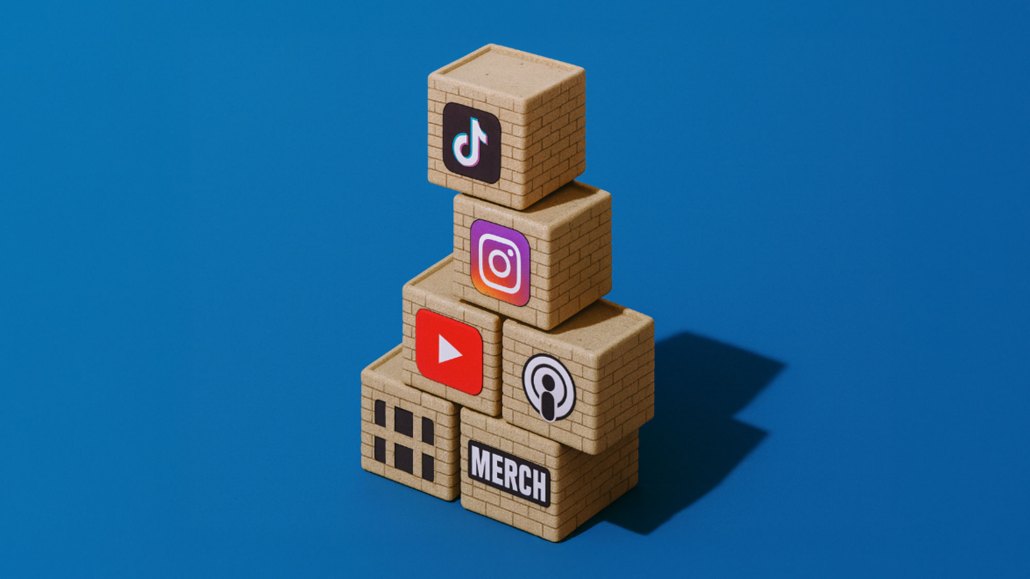
The true foundation of the creator economy was laid when platforms emerged that combined audience reach with monetization infrastructure. YouTube launched in 2005 and introduced the AdSense revenue share in 2007, creating for the first time a mechanism by which an individual could earn income directly from creating video content. The implications were enormous: a person with a camera, an internet connection, and a compelling idea could build a genuine income stream without a corporate intermediary.
Twitter, Tumblr, Instagram, and Vine each contributed to expanding the creator landscape throughout the 2010s. Each platform represented a different content medium and community culture, and each attracted different creator types. What they shared was a fundamental promise: build an audience here, and opportunity will follow.
By 2012–2015, the first wave of "professional creators" had emerged — YouTubers with millions of subscribers generating six and seven-figure annual incomes from advertising revenue alone. The cultural visibility of these early creators demonstrated to the broader public that the creator path was legitimate, scalable, and worth pursuing.
1.3 The Maturation Phase: 2016–2020
The second phase of the creator economy was defined by diversification — both of platforms and of business models. TikTok launched internationally in 2018 and introduced a radically different content discovery model based on algorithmic interest-matching rather than social following. Twitch turned live gaming into a professional career path. Podcasting exploded as smart speakers and mobile listening became ubiquitous.
Simultaneously, creator monetization evolved beyond advertising revenue. Patreon (founded 2013) pioneered the membership model, allowing creators to generate recurring income directly from fans. Substack (founded 2017) revived the newsletter as a business model, enabling writers to bypass media companies entirely. OnlyFans demonstrated that subscription-based creator income could reach extraordinary scale, regardless of content category.
By 2020, the creator economy had shifted from a peripheral cultural phenomenon to a mainstream economic reality — and the COVID-19 pandemic accelerated this shift dramatically. Locked-down audiences spent more time consuming online content than ever before. Creators who might have hesitated to go full-time made the leap. Brands redirected marketing budgets from in-person events and traditional media to creator partnerships.
1.4 Today: The Creator Economy at Scale
The creator economy in 2024 and beyond is no longer a monolithic phenomenon but a multi-layered, increasingly professionalized industry with its own infrastructure, investment ecosystem, labor dynamics, and cultural influence. It encompasses:
- Full-time professional creators operating as solo media companies
- Part-time creators supplementing primary incomes
- Creator-founded brands and product companies
- The infrastructure layer (platforms, tools, agencies, analytics)
- Brands whose marketing strategies are now significantly built around creator partnerships
Understanding its architecture requires examining each of these layers in turn.
Part Two: The Architecture of the Creator Economy
.png)
2.1 The Creator Stack: How Individual Creators Build Sustainable Businesses
The most significant conceptual shift in the creator economy over the past five years has been from creator-as-entertainer to creator-as-entrepreneur. The creators who achieve durable, platform-independent success increasingly operate not as individuals who post content, but as diversified media businesses.
A mature creator business typically consists of several interconnected components:
Audience ownership is the foundation. Creators who have learned from the volatility of platform algorithms understand that follower counts on any given platform are rented assets — they can be diminished overnight by an algorithm change, a policy update, or platform decline (the death of Vine being the most vivid historical example). The savviest creators build owned channels alongside their platform presence: email newsletters, SMS lists, Discord communities, and podcast feeds that provide direct access to their audience regardless of what any platform decides.
Content as the discovery mechanism sits atop this foundation. Platform content — YouTube videos, TikTok posts, Instagram Reels, podcast episodes — functions primarily as a mechanism for audience discovery and relationship building. It is not typically the primary revenue driver; it is the funnel through which revenue opportunities flow.
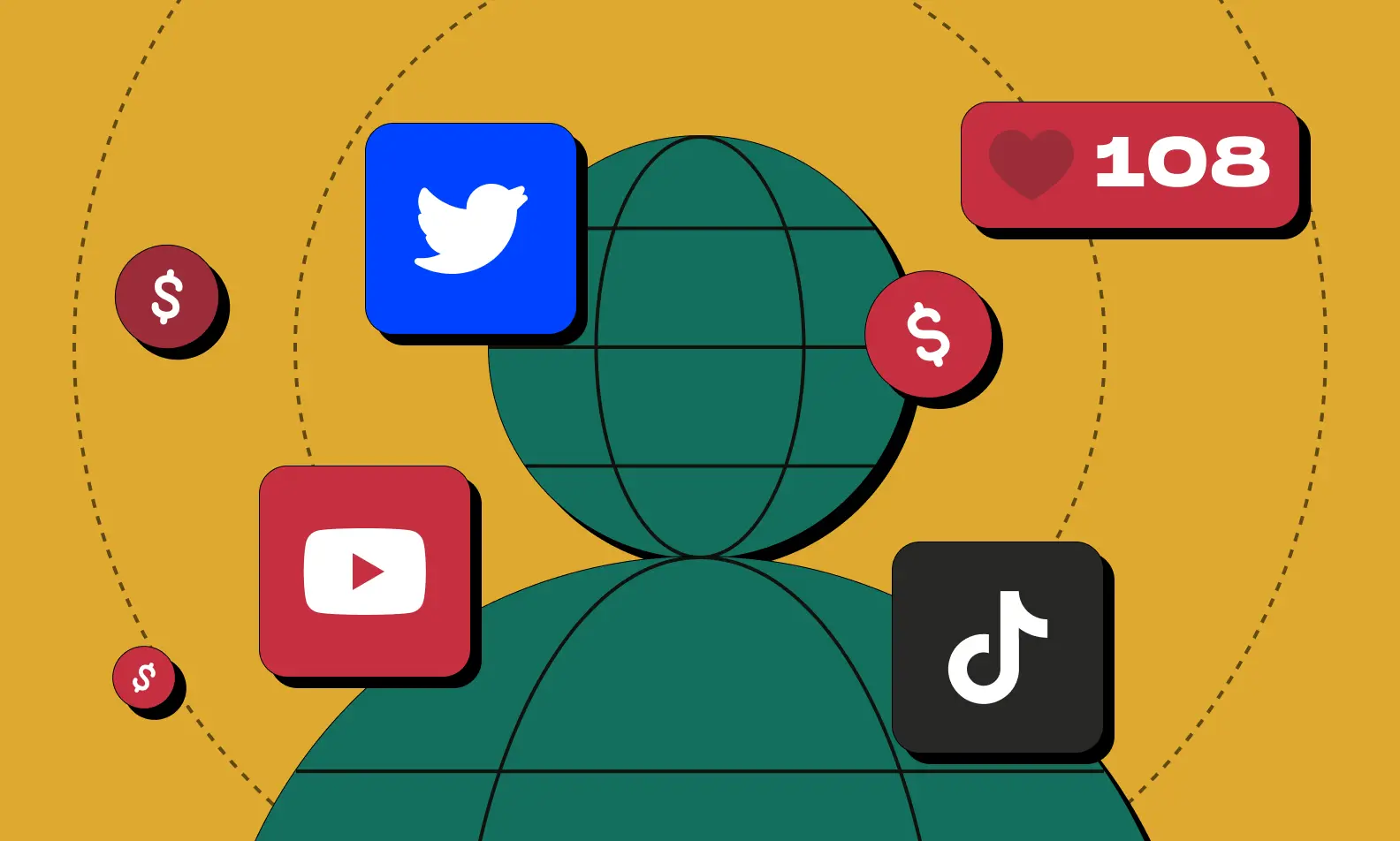
Revenue diversification is the engine. Creators who depend on a single revenue stream — particularly advertising revenue, which is subject to fluctuating CPM rates and platform dependency — are structurally vulnerable. The most resilient creator businesses typically combine four to six revenue streams:
- Brand partnerships and sponsorships: Often the largest revenue source for mid-to-large creators, brand deals range from single-post arrangements to multi-platform, multi-month campaigns. Top creators command anywhere from thousands to millions of dollars per sponsored integration.
- Platform revenue sharing: YouTube AdSense, TikTok Creator Fund, Spotify royalties, podcast ad networks — platforms increasingly pay creators directly for views and engagement, though rates vary enormously.
- Direct-to-fan revenue: Memberships (Patreon, Substack), paid newsletters, exclusive content platforms, tip jars (Buy Me a Coffee, Ko-fi), and live stream gifting represent money flowing directly from audience to creator with no intermediary brand.
- Digital products: Courses, ebooks, templates, presets, software, and other scalable digital goods represent extremely high-margin revenue that continues generating income long after creation.
- Physical products and creator-founded brands: The most ambitious creators use their audience trust as a launchpad for consumer product companies — a model that has produced some remarkable success stories.
- Services and consulting: Particularly relevant for creators in professional and educational niches, offering coaching, consulting, speaking, or agency services that leverage their expertise and credibility.
Community as a competitive moat is increasingly recognized as the differentiator that separates commodity creators from irreplaceable ones. An engaged community that discusses, debates, creates content around, and advocates for a creator's work is extraordinarily difficult to replicate, copy, or replace.
2.2 The Platform Layer: Competing for Creator Loyalty
Platforms are the infrastructure on which the creator economy runs — and their relationship with creators has become increasingly competitive, complex, and, at times, contentious.
In the early years of the creator economy, platforms held all the leverage. Creators needed platforms for distribution; platforms needed creators for content but could find alternative suppliers. This dynamic created significant power asymmetry: creators built audiences on rented land, platforms changed monetization terms with little notice, and creators had minimal recourse.
As the creator economy matured and creators gained economic and cultural influence, this dynamic has begun to shift — though not uniformly. The emergence of creator-first platforms and the competition for top creator talent has forced established platforms to improve creator terms. YouTube's expansion of monetization thresholds, TikTok's Series and LIVE subscriptions, Spotify's direct podcast deals, and Meta's investment in Reels bonuses all reflect platforms competing for creator supply.
The most significant structural development has been the rise of platforms that invert the traditional model by giving creators direct monetization tools and placing creator economic interest at the center of their design. Substack explicitly positions itself as "a place to build a business," not merely an audience. Patreon's entire purpose is creator monetization. Gumroad and Teachable exist exclusively to help creators sell directly to their audiences.
This diversification of the platform landscape — combined with creators' growing sophistication about platform risk — has created an environment where no single platform holds the overwhelming leverage it once did over creator livelihoods.
2.3 The Creator Infrastructure Economy
One of the most underappreciated dimensions of the creator economy is the vast ecosystem of companies that exists not to create content but to help creators create, distribute, analyze, and monetize content more effectively.
This "picks and shovels" layer of the creator economy includes:
Content creation tools: Video editing software (CapCut, DaVinci Resolve, Adobe Premiere), graphic design platforms (Canva), AI writing assistants, podcast production tools, streaming software (Streamlabs, OBS), and thumbnail generation tools.
Analytics and optimization platforms: Tools that help creators understand which content performs, when their audience is most active, what formats drive subscription conversions, and how to optimize SEO for discoverability.
Creator management and operations: Multi-channel network companies (MCNs), talent agencies, business managers, and the growing class of creator economy-specific financial services (banking, tax tools, and invoicing platforms built specifically for the irregular income patterns of creator businesses).
Email and community infrastructure: Beehiiv, ConvertKit, Ghost, Circle, Discord, and Geneva represent platforms designed to help creators build and monetize direct relationships with their communities.
Audience monetization tools: Kajabi, Teachable, Thinkific for courses; Gumroad for digital products; Cameo for personalized video; Clarity.fm for expert calls.
Investment in creator economy infrastructure companies has been substantial. Between 2020 and 2023, venture capital poured billions of dollars into companies serving the creator economy, recognizing that infrastructure businesses often generate more durable, scalable returns than content businesses themselves.
Part Three: The Economics of Being a Creator

3.1 The Power Law Problem
The creator economy is, at its core, a power-law distribution system. This means that rewards are not distributed along a normal bell curve but are instead concentrated dramatically at the top. A tiny fraction of creators capture a disproportionate share of total audience attention and economic value, while the vast majority of creators earn very little or nothing.
The numbers are sobering. Studies consistently find that fewer than 5% of creators earn what would qualify as a full-time living wage. The top 1% of creators on any major platform earn multiples of what the next 10% earn combined. For every creator generating seven figures annually, there are hundreds of thousands creating quality content with minimal economic return.
This is not simply a meritocracy problem — it reflects how attention economics fundamentally works. Human attention is finite. Algorithmic recommendation systems tend to concentrate views on already-popular content. Network effects mean that large audiences beget larger audiences. Discoverability is extremely difficult for new creators without either existing audience leverage, viral luck, or significant platform promotion.
Understanding the power law is essential not as a deterrent but as a calibration tool. Building a sustainable creator business requires realistic expectations about timelines, honest assessment of competitive positioning, and strategic clarity about which audience segment you are serving and how.
3.2 Creator Income: The Real Numbers
The conversation about creator income is often distorted by highly publicized success stories — the MrBeasts, the Charli D'Amelios, the Joe Rogans — who represent statistical outliers rather than typical outcomes. The reality of creator income is considerably more nuanced.
For micro-creators (1,000–100,000 followers), income is typically supplemental rather than primary. Brand deals in this tier often range from a few hundred to a few thousand dollars per post. Platform revenue is generally modest. Income from digital products, memberships, or services may be more significant as a proportion of total creator revenue. Many micro-creators in this tier are building toward full-time viability rather than having already achieved it.
Mid-tier creators (100,000–1,000,000 followers across platforms) represent the range where full-time creator income becomes genuinely achievable, though not guaranteed. Brand deals become more significant ($5,000–$50,000+ per campaign depending on niche and engagement), platform revenue is meaningful, and digital product or membership income can add substantial additional revenue. Many creators in this tier earn between $50,000 and $250,000 annually from their creator businesses.
Top-tier and elite creators (1M+ followers, high engagement, premium brand relationships) operate in entirely different economic territory. Brand deals run from six to seven figures. Product lines, investments, and equity deals become available. Media deals, book advances, speaking fees, and licensing arrangements add further revenue. The ceiling in this tier is effectively unlimited.
Perhaps more important than these tiers, however, is the concept of niche depth vs. breadth. A creator with 20,000 deeply engaged followers in a high-value niche (B2B software, financial planning, medical professional development) may generate substantially more income than a creator with 500,000 followers in a commoditized entertainment niche, simply because the audience they serve has more specific, high-value needs that align with premium products, courses, and services.
3.3 The Sustainability Challenge
Beneath the success stories, the creator economy contains a serious sustainability problem that receives insufficient attention: creator burnout.
Content creation at a level sufficient to build and maintain audience requires extraordinary, relentless consistency. Algorithms reward frequency. Audiences expect regular content. The pressure to remain perpetually relevant — to maintain posting cadence while responding to comments, managing brand relationships, creating digital products, building community, and managing the administrative reality of running a business — places enormous demands on individuals who are typically working alone or with very small teams.
Studies of full-time creators consistently identify burnout as among the most significant challenges of the profession. The parasocial nature of creator-audience relationships adds additional psychological weight — creators often feel personally responsible to their audiences in ways that corporate content producers do not.
The most resilient creator businesses have addressed this through deliberate systems: editorial calendars, content batching (recording or writing multiple pieces in a single session), team building (hiring editors, assistants, community managers), and explicit boundaries around content production pace and personal disclosure. The professionalization of creator business operations is, in many ways, a direct response to the sustainability pressures that have ended the careers of many talented creators.
Part Four: The Broader Implications of the Creator Economy
4.1 The Creator Economy and the Future of Work
The creator economy is part of a broader transformation of work that includes the gig economy, remote work proliferation, and the rise of portfolio careers. What distinguishes it from these parallel shifts is its relationship to identity, meaning, and autonomy.
Surveys of full-time creators consistently report higher job satisfaction and sense of purpose than workers in traditional employment — despite income instability, lack of benefits, and irregular hours. The ability to build something genuinely one's own, to work in an area of authentic interest, and to cultivate direct relationships with people who value one's perspective appears to generate intrinsic satisfaction that compensates for external insecurities.
This dynamic is reshaping how younger generations think about career trajectories. A 2023 survey found that a significant proportion of Generation Z respondents identified "becoming a content creator" as a primary career aspiration — a striking shift from the institutional career paths that dominated previous generations' ambitions. This doesn't necessarily mean everyone pursues creator careers full-time, but it reflects a generational recalibration of values around work, autonomy, and creative expression.
For employers and institutions, this shift creates both challenges and opportunities. The challenge: attracting and retaining talent that increasingly values flexibility, creative autonomy, and meaningful work over stability and conventional advancement. The opportunity: recognizing that employees who have personal brands, audiences, and creator skills bring unique value — as communicators, as community builders, as marketing amplifiers.
4.2 The Creator Economy and Media
The creator economy has fundamentally disrupted the traditional media industry — not by replacing it entirely, but by fragmenting and restructuring how audiences allocate attention and trust.
Traditional media institutions — newspapers, broadcast networks, major magazines — built their authority on scale, gatekeeping, and the trust that institutional validation confers. These advantages have been progressively eroded by the creator economy's core value proposition: authentic, specific, human voices that audiences trust precisely because they are not institutional.
The trust dynamics are striking. Research consistently finds that audiences — particularly younger audiences — trust recommendations from creators they follow more than they trust advertising from brands and, in many cases, more than they trust institutional journalism. This is not simply naive parasocial attachment; it reflects the genuine information advantage that specialized creators have over generalist media. A creator who has spent five years building expertise and audience in a narrow topic knows their subject and their audience more deeply than any general-purpose media institution can match at scale.
The media industry has responded in various ways: acquiring creator-founded media companies, hiring established creators as contributors or branded content producers, building creator programs to integrate independent voices into institutional brands, and in some cases restructuring entirely around creator-led content models.
4.3 The Creator Economy and Brand Marketing
Perhaps the most commercially significant dimension of the creator economy is its transformation of brand marketing. The shift from traditional advertising to creator partnerships is one of the most substantial reallocations of marketing capital in the history of advertising.
Influencer marketing — brands paying creators to reach their audiences — has grown from a niche experiment to a foundational marketing channel. The global influencer marketing industry was valued at approximately $21 billion in 2023 and continues growing at double-digit rates annually.
What drives this growth is not merely fashion or cultural novelty but measurable performance. Creator content typically drives higher engagement rates, stronger purchase intent, and more authentic brand association than equivalent investment in traditional digital advertising. Audiences trust creator recommendations within contexts they already value; they trust pre-roll ads considerably less.
The evolution of brand-creator relationships has become increasingly sophisticated. Early influencer marketing was largely transactional: pay a creator with a large following to mention a product. Modern creator marketing involves long-term brand ambassador relationships, creator-led product development, equity partnerships, co-created content series, community activation, and performance-linked compensation structures. The most successful brand-creator partnerships are genuinely collaborative — they allow creator voice and authenticity to remain intact rather than submerging it in corporate messaging.
Part Five: Emerging Trends and the Future of the Creator Economy
5.1 Artificial Intelligence: Disruption and Amplification
No force is reshaping the creator economy more rapidly or more ambiguously than artificial intelligence. AI tools have already transformed content creation workflows: AI-assisted writing, AI image generation, AI video editing, AI voiceover, and AI-powered analytics are now accessible to individual creators at minimal cost.
The optimistic view is that AI dramatically lowers the cost of content production, allowing creators to publish more, experiment more, and produce higher-quality output with smaller teams. A solo creator with AI tools can now produce work that previously required a team — handling research, drafting, editing, thumbnail generation, and SEO optimization at a fraction of traditional time and cost.
The more complex view acknowledges that AI simultaneously threatens the uniqueness of individual creative output. If AI can generate content that resembles human creative work at scale and at near-zero marginal cost, what happens to the economic value of individual creator voices? The answer appears to be: AI devalues generic, commodity content while increasing the premium on authentic human perspective, lived experience, and genuine expertise. The creator who brings unique knowledge, personality, and community is more valuable in an AI-saturated content environment, not less. The creator who produces interchangeable content is more replaceable.
There are also important ongoing conversations around AI and intellectual property — specifically, whether AI systems trained on creator content without compensation represent a fundamental appropriation of creator value — that will likely result in significant legal and platform-policy developments over the coming years.
5.2 The Rise of the Creator-Founded Brand
One of the most significant emerging trends in the creator economy is the movement from creator-as-marketer to creator-as-founder. Rather than building audiences and then licensing their influence to brands, sophisticated creators are increasingly using their audience as the launchpad for their own consumer product companies.
The logic is compelling. A creator who has built 500,000 loyal followers in a fitness niche has, in effect, already solved the most expensive problem in consumer brand building: customer acquisition. Launching a supplement line, an athletic wear brand, or a fitness app to an engaged, trusting audience of potential buyers is dramatically more capital-efficient than building a consumer brand through traditional marketing.
Examples of creator-founded brands achieving significant scale are proliferating. Several creator-founded companies have reached hundreds of millions of dollars in annual revenue, attracting private equity investment and, in some cases, public market interest. This trend is expected to accelerate as creators become increasingly sophisticated about brand-building strategy and as the tools for launching consumer brands become more accessible.
5.3 Web3, Tokenization, and Creator Ownership
The promise of blockchain technology for the creator economy centers on ownership: the idea that creators could own verifiable shares of the value their content generates, establish direct economic relationships with fans through tokenized communities, and build value that accrues to them rather than to platform shareholders.
The reality of Web3's impact on the creator economy has been more modest and more complicated than early enthusiasts projected. NFT markets, which briefly created extraordinary creator income during 2021–2022, contracted sharply. Tokenized creator communities have remained niche rather than mainstream. The frictions of cryptocurrency adoption and wallet management have limited consumer adoption.
Nevertheless, the underlying thesis — that creators should own more of the economic value they generate — remains compelling and continues to drive experimentation. Social tokens, fan memberships with ownership components, and decentralized content platforms continue developing even as market conditions have moderated. The question of whether blockchain infrastructure can deliver meaningful creator ownership at scale remains open.
5.4 Globalization of the Creator Economy
The creator economy that attracted early attention was predominantly English-language and Western-market-focused. This is rapidly changing.
Creator economies are developing with enormous velocity in Southeast Asia, Latin America, India, the Middle East, and Sub-Saharan Africa — driven by mobile-first internet adoption, young and digitally native populations, and increasing platform localization. TikTok's extraordinary growth in these regions has been particularly significant, creating creator communities in dozens of languages and cultural contexts.
The implications are substantial. Global creator market expansion means new audiences, new creator voices, and new business opportunities for both creators and the infrastructure companies that serve them. It also means the creator economy's center of gravity is shifting — the English-language Western internet is no longer the defining frame for how creator economies develop and what they produce.
Conclusion: The Creator Economy as a Permanent Structural Shift
The creator economy is not a fad, a trend, or a niche. It is a permanent structural shift in how human attention, knowledge, creativity, and trust operate in economic terms.
What began as a modest redistribution of media production from institutions to individuals has evolved into a comprehensive restructuring of how value is created, how audiences relate to content, how brands reach consumers, how people think about careers, and how expertise and personality convert into sustainable livelihoods.
The creator economy is not without its tensions and contradictions. Its power-law distribution means that extraordinary success coexists with widespread economic precarity. Platform dependency creates structural vulnerability for many creators. Burnout is real and underaddressed. Questions of authenticity, intellectual property, mental health, and equitable access remain unresolved.
But these tensions are the growing pains of a genuinely new economic form — not evidence of its fragility but proof of its scale and complexity.
For individuals navigating this economy — whether as creators, as businesses building alongside creators, as platforms competing for creator supply, or as investors identifying infrastructure opportunities — the essential insight is this: the creator economy rewards authentic expertise, genuine community, and strategic diversification over short-term viral optimization.
The creators who will define the next decade are not those who crack the algorithm today, but those who are building something irreplaceable: a point of view, a community of trust, and a business architecture durable enough to outlast any single platform's rise or fall.
The economy belongs to the creators. The question is which ones — and which ideas — are built to last.
Key Statistics Summary
| Metric | Figure |
|---|---|
| Estimated creator economy value (2024) | ~$250 billion |
| Projected value by 2027 | ~$480 billion |
| Global content creators | 200+ million |
| Global influencer marketing market (2023) | ~$21 billion |
| Creators earning full-time income | Less than 5% |
| Annual growth rate of influencer marketing | ~15–20% |
References and Further Reading
- The Creator Economy by Li Jin (a16z) — foundational essays on the economics of the passion economy
- Harvard Business Review — coverage of creator economy business models and brand marketing shifts
- Influencer Marketing Hub — annual State of Influencer Marketing reports
- Linktree Creator Report — annual survey of creator demographics, income, and habits
- Bloomberg and The Information — investigative coverage of platform-creator economics
- Benedict Evans — analysis of attention economics and media industry transformation