
Modern laptop and computer reviews are often limited by their reliance on isolated metrics such as CPU benchmarks or GPU scores. While these indicators provide a snapshot of theoretical performance, they fail to capture how devices behave under continuous, real-world conditions.
To address this limitation, this section expands on a series of structured case studies. Each case is not merely descriptive but analytical—focusing on usage context, behavioral patterns, and performance sustainability over time.
The goal is to move from answering “How powerful is this device?” to a more relevant question:
“How does this device perform when integrated into a real human workflow?”
Case Study 1: Ultrabook Efficiency in Daily Productivity
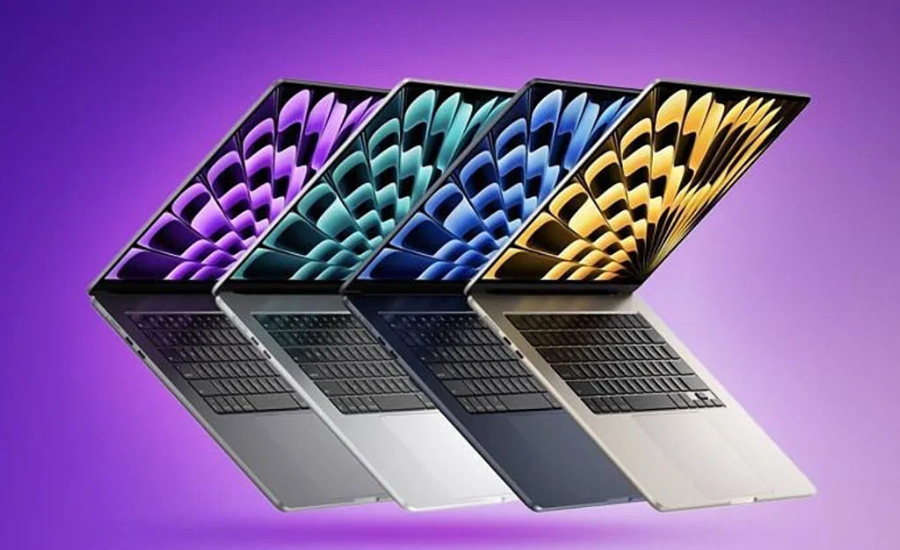
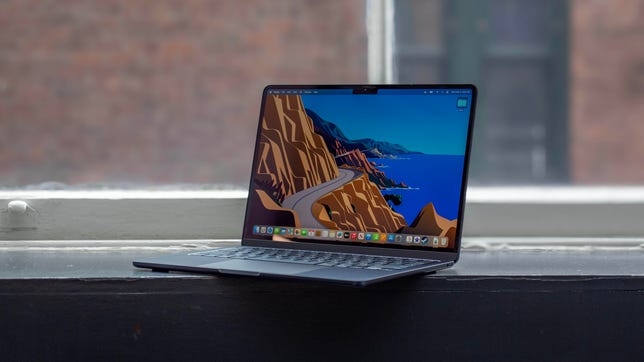
The MacBook Air M3 represents a class of ultrabooks optimized for efficiency rather than peak performance.
Context of Use
This case simulates a typical knowledge worker or student workflow over a full day:
- 15–20 browser tabs open simultaneously
- Continuous switching between note-taking apps, email, and messaging platforms
- Occasional media consumption (video streaming, music)
- Background synchronization (cloud storage, notifications)
Observed Behavioral Performance
During this extended usage period, the device demonstrates near-instant responsiveness when launching or switching between applications. The absence of fan-based cooling results in completely silent operation, which contributes to a more focused working environment.
However, the most significant observation is not speed but consistency. Even after several hours of continuous usage, there is no noticeable degradation in responsiveness. This suggests that the system is not merely fast, but efficiently managing its resources over time.
Battery performance further reinforces this pattern. Instead of fluctuating dramatically under mixed workloads, the device maintains a predictable discharge curve, allowing users to rely on it for a full working day without needing to recharge.
Analytical Interpretation
The performance characteristics observed here are not the result of raw computational power, but of architectural efficiency. The tight integration between hardware and software enables optimized task scheduling, reduced background overhead, and effective energy management.
Research Insight
Devices designed around efficiency can deliver superior real-world productivity compared to higher-spec machines that lack optimization. In this context, performance stability over time becomes more valuable than peak performance bursts.
Case Study 2: Gaming Laptop and Thermal Constraints

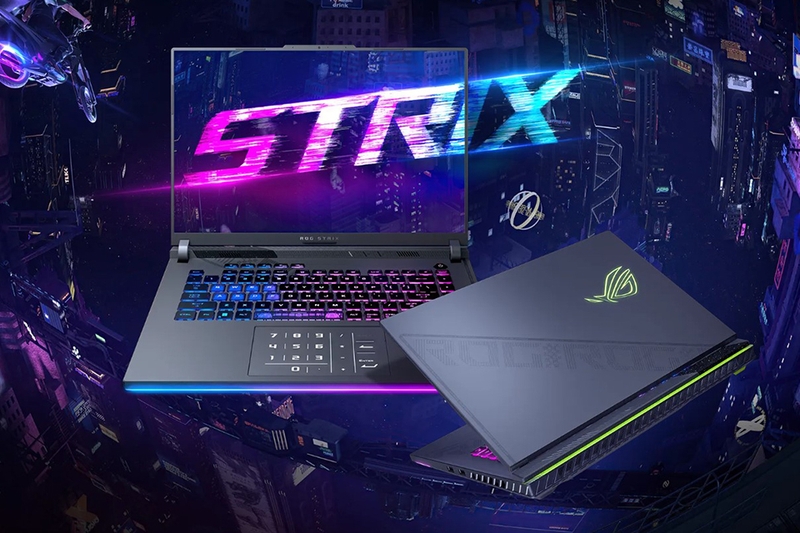
The ASUS ROG Strix G16 serves as a representative example of high-performance gaming laptops designed for intensive workloads.
Context of Use
This case focuses on sustained high-load scenarios:
- Playing graphically demanding AAA games for 1–2 hours
- Running background applications such as voice chat and streaming software
- Occasional multitasking (browser, music, overlays)
Observed Behavioral Performance
At the start of each session, the device delivers exceptional performance. Frame rates are high and stable, and the system responds instantly to user input. This reflects the strength of its high-end CPU and GPU configuration.
However, as usage continues, a gradual shift becomes evident. Thermal buildup leads to increased fan activity, which introduces significant noise. In some cases, minor fluctuations in performance can be observed as the system attempts to regulate temperature through dynamic clock adjustments.
User comfort also becomes a factor. The keyboard area may warm up, and prolonged exposure to fan noise can affect the overall experience, even if performance remains technically strong.
Analytical Interpretation
This case highlights a critical distinction between peak performance and sustained usability. While the device excels in delivering high computational output, its thermal design becomes a limiting factor over time.
The relationship between heat, noise, and performance introduces a trade-off that is often overlooked in traditional reviews.
Research Insight
High-performance devices must be evaluated not only by their maximum capabilities but by how effectively they maintain those capabilities under prolonged stress. Thermal engineering is therefore a central component of real-world performance.
Case Study 3: Budget Laptop and Perceived Value
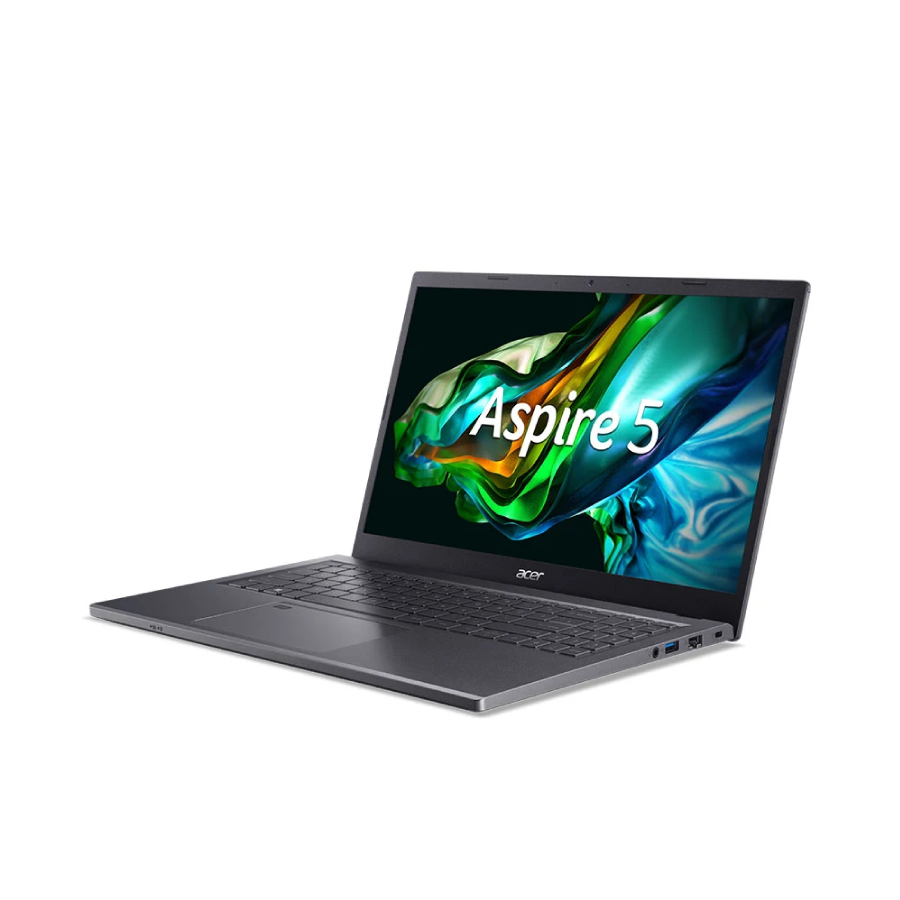
The Acer Aspire 5 represents a widely accessible category of budget laptops aimed at general users.
Context of Use
This scenario reflects light to moderate usage patterns:
- Web browsing and online research
- Document editing and basic productivity tasks
- Streaming video content
- Occasional multitasking with multiple applications
Observed Behavioral Performance
In isolated tasks, the device performs adequately. Applications open within a reasonable timeframe, and basic workflows are handled without significant issues. For single-task usage, the experience can feel comparable to more expensive devices.
However, limitations become apparent when multitasking is introduced. Running several applications simultaneously leads to slower response times, and transitions between tasks are less fluid. This creates a perception of lag, even if the system is functioning within its expected capabilities.
Battery performance is sufficient but lacks the consistency observed in higher-end devices. Users may need to manage usage more carefully to avoid interruptions.
Analytical Interpretation
The key factor in this case is not performance, but expectation alignment. The device delivers exactly what its specifications suggest, yet user satisfaction depends heavily on how well those capabilities match intended use.
Research Insight
For a large segment of users, “good enough” performance is functionally equivalent to “excellent” performance. Value is therefore defined not by maximum capability, but by how closely a device meets user requirements without unnecessary cost.
Comparative Scenario: Video Editing Across Devices
To further illustrate contextual performance, the same task—editing 4K video footage—is applied across different devices.
Observational Comparison
| Device | Performance Behavior | Practical Limitation |
|---|---|---|
| MacBook Air M3 | Smooth for short edits | Limited under heavy timelines |
| ASUS ROG Strix G16 | Handles complex projects | Heat and noise increase |
| Acer Aspire 5 | Struggles with rendering | Not suitable for this task |
Interpretation
This comparison demonstrates that performance is not absolute—it is conditional. A device that performs well in one context may become inadequate in another.
Research Insight
Task-specific evaluation provides more meaningful insights than generalized performance rankings.
Case Study 4: Desktop vs Laptop in Professional Workflows

The Dell XPS Desktop is used to represent desktop computing in professional environments.
Context of Use
- Continuous video editing and rendering
- Running multiple heavy applications simultaneously
- Long-duration workloads (several hours without interruption)
Observed Behavioral Performance
Unlike laptops, the desktop maintains stable performance over extended periods. The larger chassis allows for more effective cooling, preventing thermal throttling. This results in consistent processing speeds and predictable output times.
Additionally, the ability to upgrade components such as RAM and storage provides long-term flexibility. Users can adapt the system to evolving needs without replacing the entire device.
Analytical Interpretation
The desktop’s advantage lies not only in raw power but in sustainability. Its design supports continuous high-performance operation, making it more suitable for demanding professional tasks.
Research Insight
Performance scalability and thermal capacity are critical for long-term productivity, particularly in professional environments.
Synthesis of Findings
Across all cases, several consistent patterns emerge:
- Performance must be evaluated over time, not at a single point
- Thermal design plays a decisive role in usability
- Optimization can outweigh raw hardware specifications
- User satisfaction depends on alignment between device capability and usage context
Conclusion: Toward Context-Aware Reviews
These expanded case studies demonstrate that modern laptop and computer reviews require a shift toward context-aware analysis. By examining how devices perform under realistic conditions, it becomes possible to provide more accurate, relevant, and actionable insights.
Rather than asking which device is objectively “best,” the focus should be on identifying which device performs best within a specific context.
👉 In a complex and evolving market, contextual accuracy is more valuable than absolute rankings.